Project overview
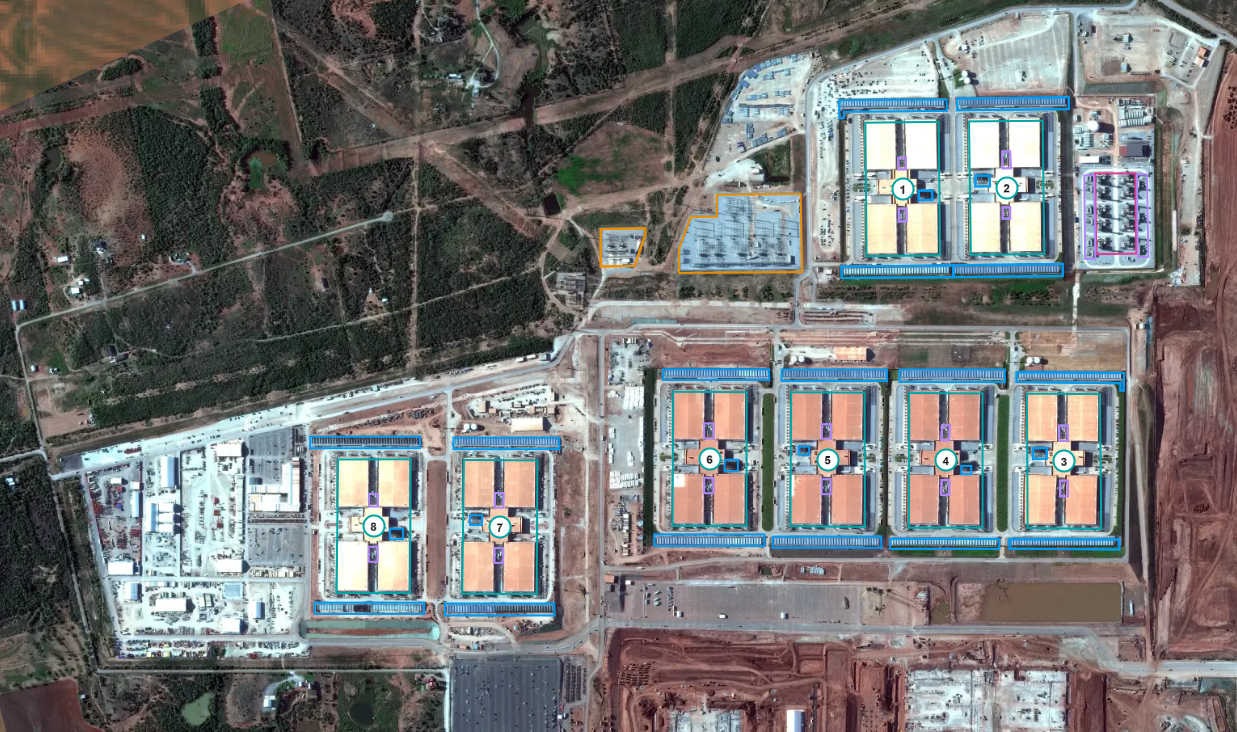
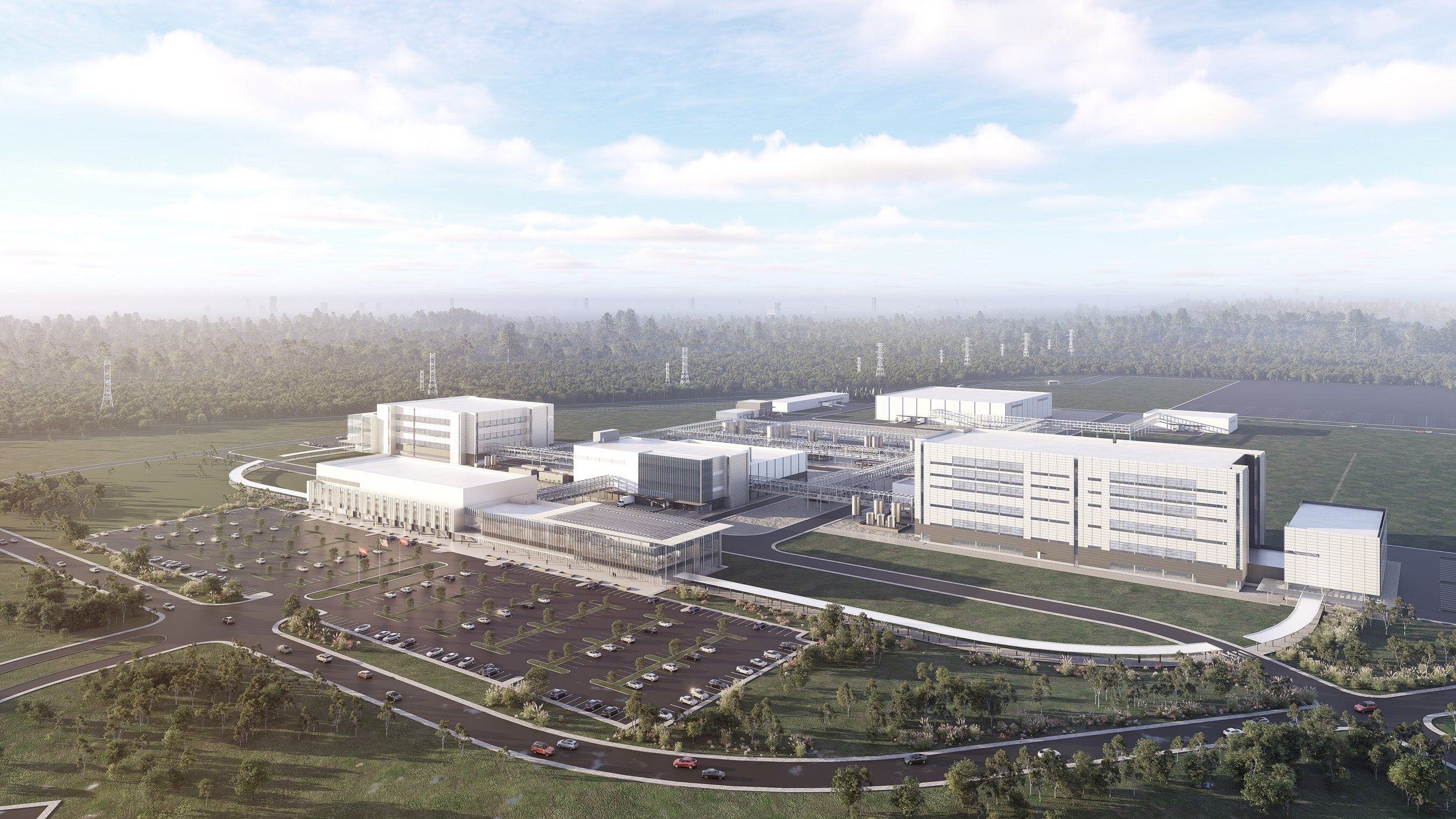
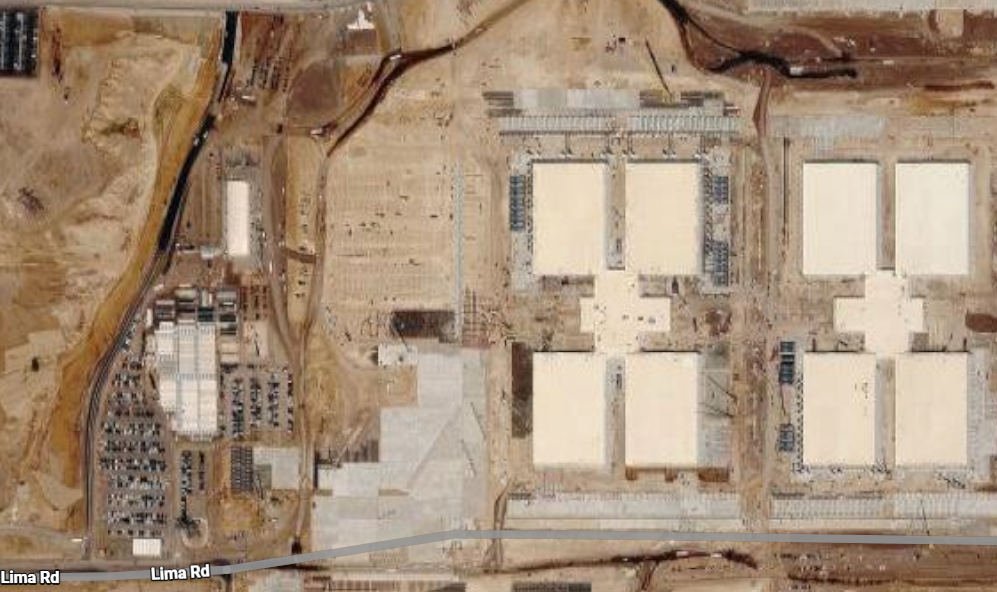
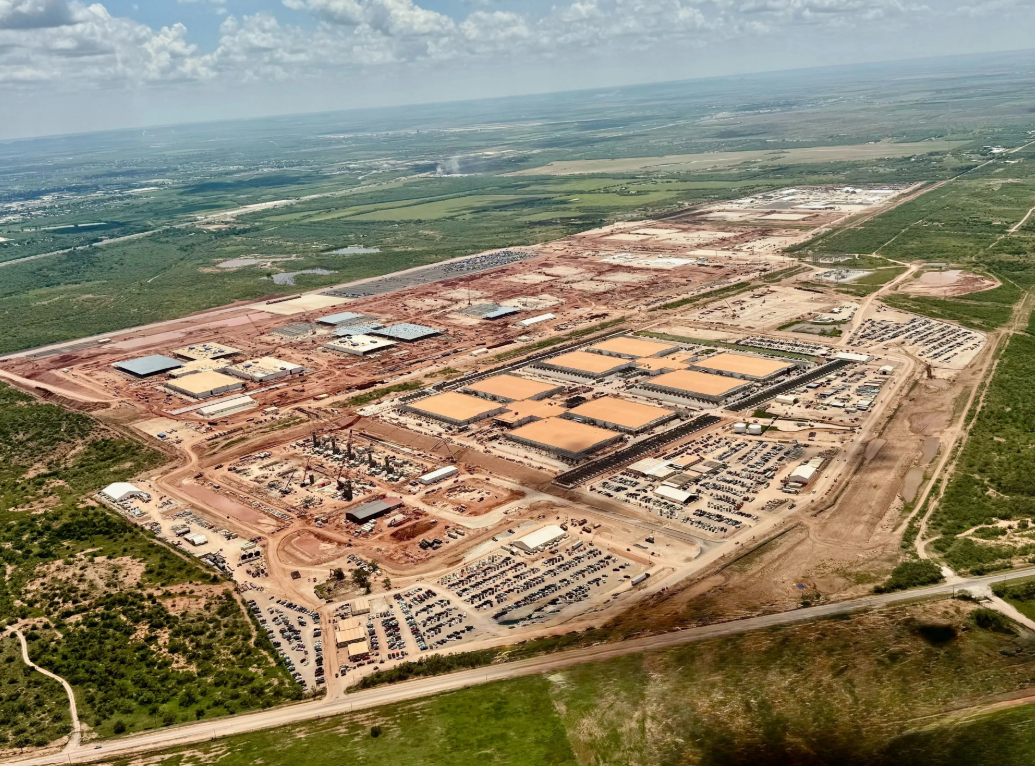
Project Stargate in Abilene is the flagship campus associated with the $500 billion U.S. infrastructure initiative announced in January 2025. That figure describes the national investment ambition over four years, not the cost of this one site. The Abilene core comprises eight buildings, approximately 4 million square feet and 1.2 GW of planned capacity at Lancium’s Clean Campus.
The site was already a power and data-center development before the Stargate announcement. Lancium established the location and electrical infrastructure; Crusoe began data-center construction in June 2024. The first phase went live on Oracle Cloud Infrastructure in September 2025 for OpenAI workloads. Later buildings, power delivery and commissioning form a separate sequence of milestones. The first phase is operational, while later buildings continue through fit-out and commissioning.
Project at a glance
- Master developer / land and power
- Lancium
- Data-center developer
- Crusoe
- Cloud operator / infrastructure
- Oracle Cloud Infrastructure
- Workload customer
- OpenAI
- General contractor / construction manager
- DPR Construction
- Electrical
- Rosendin
- Mechanical / plumbing
- Southland Industries
- Architecture / master planning
- HKS
- Technology / design engineering
- AlfaTech
- Structural engineering
- GPLA
- Civil engineering
- Kimley-Horn
- Power-delivery EPC
- Mortenson
- On-site generation contractor
- Primoris Energy Services
- Financing partners
- Crusoe; Blue Owl Capital; Primary Digital Infrastructure
- Investment structure
- $15B joint venture; separate construction and equipment budgets
- Location
- 615 FM 2404 · Lancium Clean Campus · Abilene, Taylor County
- Core campus
- 8 buildings · approximately 4M SF
- Typical building
- Approximately 480,000–485,000 SF
- Total size
- Approximately 4 million SF
- Planned core capacity
- 1.2 GW
- Construction began
- June 2024
- First phase live
- September 2025
- Original core delivery target
- Mid-2026
- Remaining delivery
- Fit-out and commissioning; final full-capacity date not confirmed
- Grid infrastructure
- 200 MW / 138 kV plus 1 GW / 345 kV
- On-site generation
- Approximately 350 MW
- Cooling
- Closed-loop, non-evaporative liquid cooling
- Separate adjacent development
- 900 MW Microsoft campus · first energization target mid-2027
Latest updates
Construction timeline, from announcement through delivery. Filed dates and future targets are labeled separately from confirmed events. Reviewed September 25, 2026.
2021
Lancium selects Abilene/Taylor County for Clean Campus
May 2022
Mortenson begins original 200 MW / 138 kV substation
Nov. 3, 2022
Lancium Clean Campus groundbreaking
2024
Existing 138 kV infrastructure expanded
March 2024
DPR/design/construction team begins intensive collaborative design
June 2024
Crusoe begins data-center construction
July 18, 2024
Crusoe/Lancium announce 200 MW initial AI data center and 1.2 GW expansion plan
July 22, 2024
TDLR files Building 1
Sept. 3, 2024
TDLR Building 2 filing
Jan. 21, 2025
Stargate publicly announced
Feb.–Apr. 2025
TDLR filings for Buildings 3–8
March 2025
Construction begins on six-building second phase
May 21, 2025
$15B financing/JV structure announced for six additional buildings
June 2025
Oracle begins delivering NVIDIA GB200 racks
June 25, 2025
Buildings 1–2 begin connecting to Abilene Northwest substation, according to grid analysis
Sept. 30, 2025
Crusoe announces first phase live
Nov. 2025
Building 8 topped out
Dec. 19, 2025
First transformer at new 1 GW/345 kV substation energized
Jan. 10, 2026
345 kV connection to Mulberry substation energized, according to grid analysis
March 10, 2026
New 1 GW substation fully energized using temporary transformers
March 2026
OpenAI drops additional Abilene expansion; Microsoft subsequently takes adjacent 900 MW project
April 2026
Oracle says 200 MW operational
June 2026
Yes Energy reports ~407 MW facility load
July 2026
Independent satellite-based estimate puts Buildings 3–4 into operation
Sept. 2026
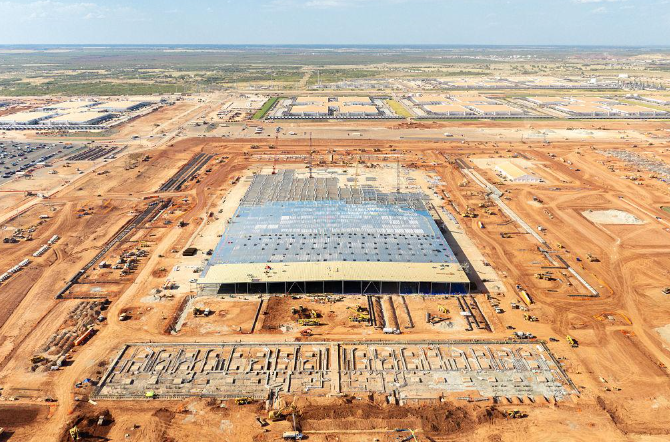
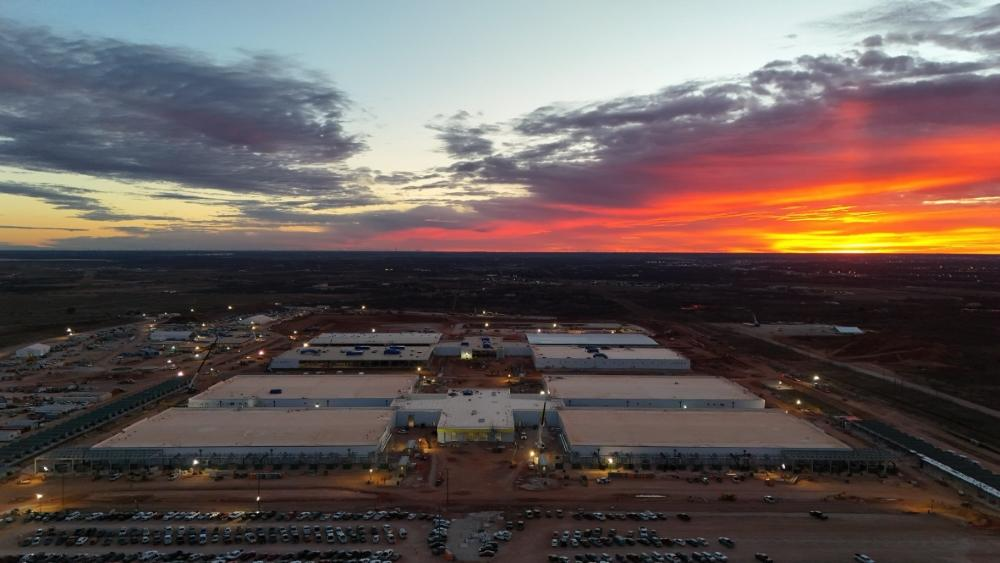
Buildings 5–8 structurally complete/roofed but public operational confirmation remains limited
Project Team



Company logos supplied by publisher.
Design: KH, HKS, GPLA, BW Design Group, MPS, Cupertino Electric, Maverick and Sabre.
Multi-prime: DPR Construction, Rosendin and Southland Industries.
Trades/prefab: Wagner, WW Afco, Digital Building Components, EIG, JLA, E2 Optics, Walker Electric, Western States, Vanguard, Flynn, North Texas Fire Protection, Cherry Coatings, Goins Crane Services, Instor/Accelevation and Crusoe Industries.
The announced design calls for each building to support up to 50,000 NVIDIA GB200 NVL72s connected through one integrated network, providing computing infrastructure for AI training and inference.
At the time of the expansion announcement, approximately 2,000 people were working on site each day. The additional buildings were expected to increase that workforce to nearly 5,000.
The Development Corporation of Abilene estimated that the initial phase could generate approximately $1 billion in direct and indirect economic impact over 20 years. The expansion could increase that contribution substantially, although this estimate applies to the initial phase rather than the completed eight-building campus.
Oracle subsequently reported nearly 20 million worker hours and up to 9,000 workers on site to date by June 2026. This later cumulative account covers a broader period than the earlier ENR snapshot; it should not be read as 9,000 workers present simultaneously.
DPR’s LinkedIn announcement marking Building 8’s topping out cited 17 months and more than 10 million labour hours. This is a separate milestone from Oracle’s later workforce update.
Design
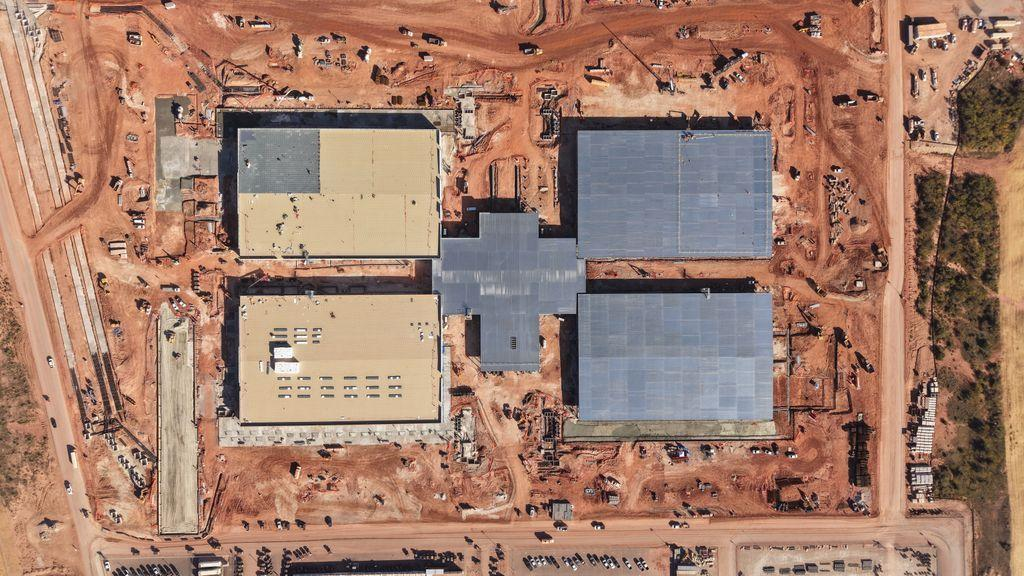
A repeatable building design is a major reason the project could move so quickly. DPR describes each building as roughly:
- 4 data halls
- Approximately 106,000 sq ft per data hall
- A central utility hall
- 500 racks per hall
- Up to 25 MW of IT load per hall
- Approximately 100 MW of IT capacity per building
The architecture follows a repeatable model, with standardized components and the same core design repeated across eight buildings.
That repetition matters because conventional hyperscale construction often involves substantial bespoke design and coordination between buildings. Reusing the design allows the team to carry lessons and construction processes from one building to the next.
Power
Abilene’s power strategy combines access to regional wind and renewable generation, expanded grid infrastructure and behind-the-meter natural-gas generation. Each element supports a different part of the campus’s phased delivery and operating requirements.
Original grid connection
The campus initially relied on a 200 MW, 138 kV substation, providing the electrical infrastructure needed to advance the first two buildings. This existing connection gave the development a starting point while the larger power-delivery system was built.
Expansion substation and energization
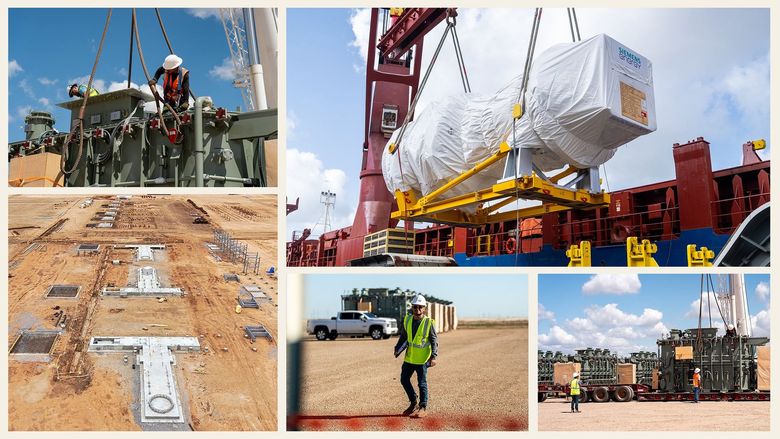
Mortenson then constructed a 1 GW, 345 kV greenfield substation on approximately 12.5 acres. Construction began in the second quarter of 2025. The first transformer was energized on December 19, 2025, followed by all five main transformers on March 10, 2026.
Three of the five transformers were temporary units, allowing energization to proceed while permanent equipment was being procured. This approach helped bridge long equipment lead times. Substation energization establishes power-delivery capability; it does not by itself mean every data hall is commissioned or operating at full load.
Transmission connections
Yes Energy’s analysis identifies a double 345 kV transmission corridor associated with the campus and the Abilene Mulberry Creek substation, alongside the existing Abilene Northwest 138 kV infrastructure. Together, these connections support the transition from the initial development phase to the larger campus.
On-site natural-gas generation
Crusoe initially described the on-site gas plant as backup and bridge power. Primoris’ documentation lists ten turbines: five Solar Titan 350 units and five GE LM2500XPRESS units, with total generation capability exceeding 350 MW.
Crusoe says the turbines use selective catalytic reduction (SCR) for emissions control and are intended to replace conventional diesel backup generation. In a McKinsey interview, Crusoe CEO Chase Lochmiller explained that renewable output is not always available when needed and that waiting for all required grid infrastructure would take substantially longer.
The resulting system combines renewable power available through the grid with on-site dispatchable generation. The gas plant supports reliability and the delivery sequence while the campus’s electrical infrastructure develops.
Power architecture: wind and renewables + grid connections + behind-the-meter natural-gas generation.
Water
The campus uses a recirculating facility-water system with heat rejected through air-cooled equipment, avoiding routine evaporative cooling-tower consumption. The design supports direct-to-chip cooling, rear-door heat exchangers and air cooling so that hardware configurations can change without requiring one fixed cooling approach. Closed-loop cooling still needs an initial fill and maintenance top-ups; it does not mean that the campus uses no water.
Saving water before the first server switches on
Southland designed a high-flow reverse-osmosis flushing system for the chilled-water pipes, with the team projecting a 75% reduction in flushing-water use. The innovation brings water conservation into construction itself: preparing the cooling pipework, not just running it once the data halls are operational.
The 75% figure applies to projected water savings during pipe flushing, rather than total campus water consumption.
Buildings 3–8: Construction Budgets Are Not Campus Investment
The later buildings repeat approximately 480,000–485,000-square-foot shells, with the supplied registrations generally showing $292 million per shell and approximately $384 million per tenant-improvement package. A $292 million shell estimate should not be presented as the complete cost of an equipped building. Package boundaries, scope changes and equipment procurement must be reconciled before aggregating estimates. The $15 billion joint-venture financing structure operates at a different level from these individual registrations.
What happened to the planned expansion?
The original core plan grew from two buildings to eight buildings, with 1.2 GW of planned capacity. A further expansion was then contemplated beyond that core campus.
In March 2026, OpenAI decided not to proceed with the additional Abilene capacity and instead allocated additional capacity elsewhere. Reporting around that decision created confusion about whether Stargate Abilene itself had been canceled.
The existing eight-building, 1.2 GW campus continued. The change concerned the additional capacity beyond it.
Microsoft took the adjacent expansion.
On March 27, 2026, Crusoe announced a 900 MW AI factory campus for Microsoft immediately adjacent to the existing Abilene infrastructure. The separate development consists of:
- Two additional buildings
- Closed-loop liquid cooling
- A dedicated on-site power plant
- First building targeted for energization in mid-2027
Industry Recognition
The project was announced as the North American Data Center Project of the Year at the 2025 DCD Global Awards. Its significance for construction readers is the combination of repeated design, prefabrication, high-density cooling and coordinated infrastructure delivery. The execution model is useful to study, while the operating status of each building still needs to be tracked separately.
Why Abilene?
The choice of Abilene brings together power availability, existing infrastructure, land and local support.
1. Wind power availability
Abilene sits in a part of West Texas with substantial wind generation. The opportunity extends beyond the amount of wind power available.
Crusoe CEO Chase Lochmiller described renewable generation being curtailed when output exceeded local transmission or demand capacity, including periods of negatively priced electricity. A large, flexible electricity consumer can absorb some of that otherwise-constrained generation.
That relationship between generation, transmission and demand helps explain the location more precisely than electricity prices alone.
2. Existing transmission infrastructure
Lancium had already begun building electrical infrastructure before the data-center development. Mortenson says work on the original 200 MW, 138 kV substation began in May 2022, followed by transmission and interconnection work. The infrastructure was expanded in 2024.
That head start helped the site move quickly. The development could build on an established power campus rather than begin the land and interconnection process from scratch.
Starting from scratch: find land → request a 1 GW interconnection → wait for grid upgrades → build.
Abilene’s starting point: existing power campus → existing land → existing interconnection → build AI infrastructure.
3. Available land
The Clean Campus provided a large, contiguous development footprint suitable for multiple buildings approaching 500,000 square feet each, alongside substantial electrical infrastructure.
4. Workforce
Abilene’s economic-development organizations emphasized access to universities, technical training and a regional workforce. Crusoe also cites workforce availability as a reason for selecting the location.
5. Local government support
The City of Abilene and Taylor County supported Lancium’s development, with tax-abatement arrangements forming another part of the site-selection story.
In August 2025, the City approved separate agreements for Buildings 1–8 providing an 85% abatement on the taxable value of new improvements and tangible personal property for 10 years. A second 10-year abatement structure is also available under the agreements.
6. The downside: water
Abilene’s relatively dry West Texas location and historical water-supply constraints make conventional evaporative cooling a less obvious fit. That context helps explain the importance of the campus’s closed-loop, non-evaporative cooling architecture.
Campus construction gallery