Project News / Education
Texas Awards Texas Tech $19.1 Million for NVIDIA Computing Cluster in Lubbock
A Texas Semiconductor Innovation Fund grant of $19,108,579 will support a next-generation computing cluster at Texas Tech University, adding to a state-backed clean room and an NVIDIA partnership the university announced earlier this year.
Governor Greg Abbott on Nov. 12 announced a Texas Semiconductor Innovation Fund grant of $19,108,579 to Texas Tech University for a next-generation computing cluster project in Lubbock. The figure is a state grant award, not a construction contract or an estimated building cost, and the announcement did not state a total project budget or identify any construction work tied to the award.
According to the Governor's office, "TTU's project will transform semiconductor research and development by leveraging a network of interconnected high-performance servers designed to function as a single unified system to handle massive, parallel workloads." The release did not name the building or data center that will house the cluster, and it did not give an installation or operating date. Texas Tech's High Performance Computing Center currently operates two data centers: its main location in Experimental Sciences Building I on the main campus, which houses the main production clusters and central file system servers, and a secondary location at the Reese Center, several miles west of campus, which houses isolated specialty clusters. The university has not said which of those sites, if either, will hold the new system.
Computing infrastructure and research
"Texas is where higher education research powers real-world innovation," Governor Abbott said in the announcement. He added that "the bright minds in our public research institutions like Texas Tech University will advance America's leadership in semiconductor research and development."
Texas Tech President Lawrence Schovanec said, "We are grateful to Governor Abbott and state leaders for this investment in Texas Tech University and the state's future," and that "This support will expand our ability to apply advanced computing to challenges that matter to Texas while preparing students to lead in an increasingly technology-driven world."
Semiconductor investment program
Texas Tech University System Chancellor Brandon Creighton tied the award to the system's NVIDIA hardware and its national security initiatives. "With NVIDIA's most advanced computing technology coming to Texas Tech, we will have the fastest and most powerful computing capability at any public research university in the nation — right here in West Texas," Creighton said. "Together with the Texas Tech Innovation Hub and Reese National Security Complex, this investment will accelerate research, develop the next generation of talent, and strengthen America's national security."
State Sen. Charles Perry said, "Texas Tech has long been a driving force for innovation and economic growth in West Texas," and state Rep. Carl Tepper said, "This $19.1 million investment is a tremendous win for Texas Tech University, Lubbock, and all of West Texas."
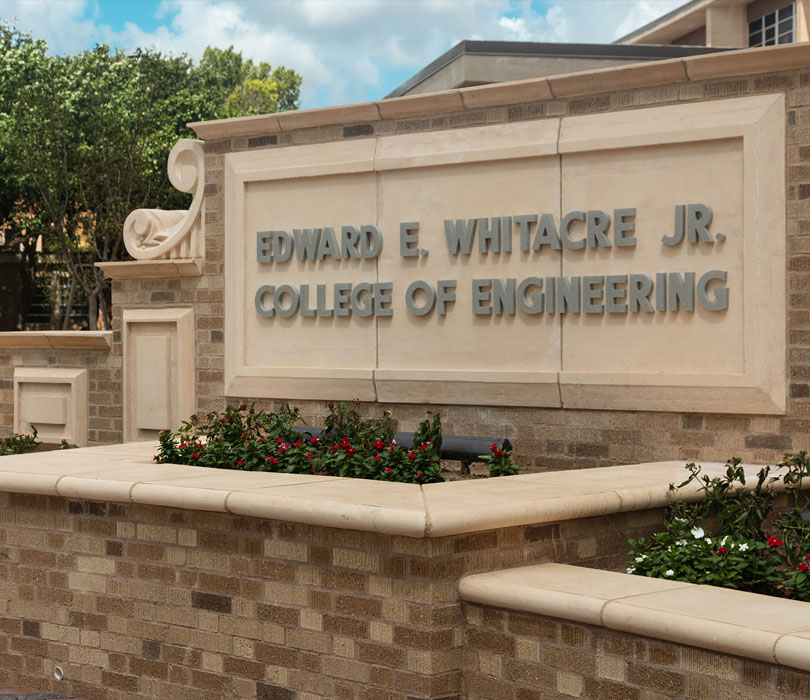
The award is the second Texas Semiconductor Innovation Fund grant to Texas Tech this year. In January, the university announced that its Edward E. Whitacre Jr. College of Engineering had received a $12 million grant for a multipurpose clean-room facility, with Texas Tech matching the state funding for a total project award of $24 million. The university said the clean room is planned to be operational in 2027 and will support research on next-generation ultra-wide bandgap semiconductors, along with a new electrical engineering technology major the college plans to launch that year. "Without this funding, I don't think we can have a good quality clean room," Hieu P. Nguyen, an associate professor in electrical and computer engineering, said at the time.
In February, Texas Tech announced a partnership with NVIDIA built on GB300 NVL72 systems, which use Grace CPUs, plus a new cluster of B300 accelerators on the NVIDIA Blackwell Ultra platform. The university said it would be the first R1 public university in the country to own and operate a system built for agentic AI, and that the platform would provide computing access to Texas businesses through a Texas-based AI cloud. Target sectors named by the university included healthcare, energy and agriculture, finance, advanced manufacturing, and national security and defense.
Next steps
In August, Texas Tech's legislative appropriations request for the 2028 to 2029 biennium sought $71 million to expand advanced computing, including $35 million for computing infrastructure, $22.8 million for research and $13.2 million for academic programs. The request outlined plans to build on the existing NVIDIA GB300 environment with next-generation Vera Rubin architecture and a goal of enrolling at least 5,000 students a year in computational micro-credential and upskilling programs.
The Texas Semiconductor Innovation Fund was created under the Texas CHIPS Act, which Governor Abbott signed in 2023, along with the Texas Semiconductor Innovation Consortium. Both programs are administered by the Texas CHIPS Office, a division of the Texas Economic Development & Tourism Office within the Office of the Governor.