
Enbridge Tests Demand for 2Bcf/d Katy–Gillis Pipeline Expansion
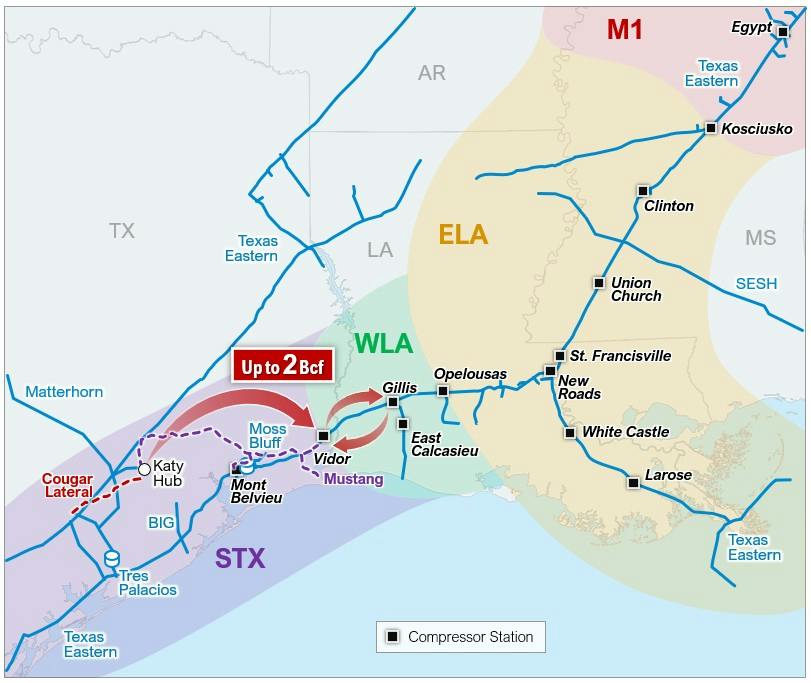
A commercial open season seeks interest in added gas transportation capacity toward Louisiana, with service targeted for early 2031.
Texas Eastern Transmission, an Enbridge subsidiary, has launched an open season for the proposed Katy to Gillis Expansion. The project would add up to 2 billion cubic feet per day of natural-gas transportation capacity between the Katy market and southwest Louisiana.
The commercial process began October 13 and is reported to close October 30. Early 2031 is the proposed service horizon. Neither date establishes that construction is approved or that an EPC contract has been awarded.
A commercial test before a construction commitment
An open season asks prospective customers to indicate interest in transportation service. The outcome helps shape capacity, commercial commitments and the basis for a development decision. It is an early step in a pipeline project rather than a construction notice.
The proposed connection is aimed at LNG, industrial and power-generation markets along the Gulf Coast. The reviewed announcement does not provide a final capital budget or a verified list of construction packages.
Route and facility scope still matter
The capacity figure describes transportation capability, not pipeline length or construction value. A detailed route and facility plan would be needed to understand new pipe, connections, compressor requirements and the resulting civil and electrical work.
For contractors, those technical definitions determine the eventual opportunity. They should not be replaced by assumptions based on other Enbridge projects or on the scale of the proposed gas flow.
The next development gates
The immediate milestone is the close of the open season and any subsequent confirmation of customer support. Regulatory filings, a defined scope and a sanctioned investment decision would provide stronger evidence of a construction program.
The proposal is relevant to Texas because it could change how gas moves from the Katy area toward Gulf Coast demand. For now, it remains a commercial-development story with a long delivery horizon and no publicly verified construction team.