
Samsung Eyes November Start for Second Taylor Fab as Chip Campus Expands
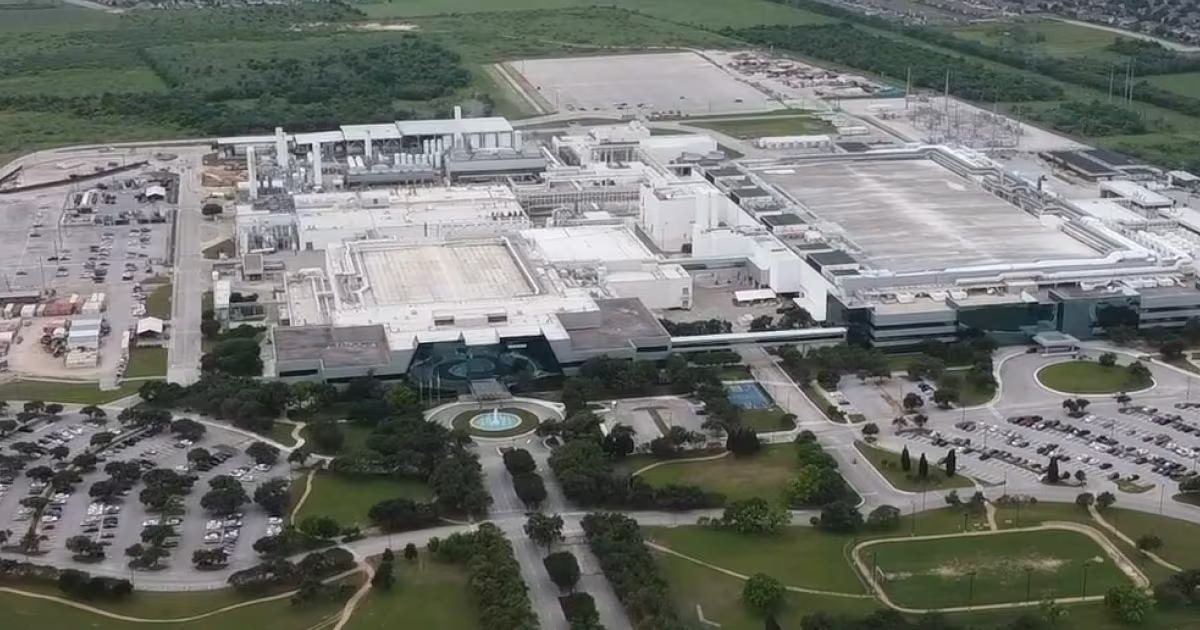
A reported November start and 2030 production target put Samsung’s second Taylor fab in focus, extending a campus at the center of its Texas manufacturing expansion.
Samsung is preparing to begin construction on its second semiconductor fabrication plant in Taylor in November 2026, according to October 15 reporting from the Austin American-Statesman. The next facility, known as Fab 2, is expected to add another major manufacturing building beside the first fab in Williamson County, with production targeted for 2030.
The expansion is reported at approximately 2.7 million square feet. That scale would make it a substantial industrial construction program in its own right, involving the building, highly controlled production environments and the infrastructure needed to support chipmaking. The latest timing sharpens a plan Samsung had already outlined during its July earnings call, when it said construction would begin before the end of 2026.
Checking your membership…
November brings the next phase into focus
The reported November start is the immediate development to watch. It is a planned milestone, rather than confirmation that the main Fab 2 construction phase has begun. The 2030 date refers to the production horizon; it should not be treated as a separately verified building handover date or a guarantee that every part of the campus will finish together.
Samsung’s first Taylor fab is on a different schedule. The company’s recent economic-impact release retains an end-of-2026 operational target for that facility. Building a second fab while the first moves toward startup means the campus could combine major construction, equipment installation and manufacturing operations over the coming years.
Foundation work gives the second fab a head start
In an August interview with the Korea JoongAng Daily, Taylor Mayor Jim Buzan said piers and foundations for Fab 2 had been installed during the first fab’s development. His account provides a more specific picture of the site than a simple description of an untouched plot awaiting a groundbreaking.
The distinction matters to the construction schedule. Earlier enabling work can precede a later main-building construction milestone. The mayor’s account does not establish that the full structure, cleanrooms or production systems are complete, but it explains how the November phase can follow work already carried out beneath the future building.
A reported 2.7 million square feet of advanced manufacturing
The approximately 2.7 million-square-foot figure has appeared in reporting on the second Taylor plant. It describes the reported facility scale, not a verified cleanroom area. The reviewed sources do not provide a current floor-by-floor breakdown or a final division between manufacturing, equipment support and other building uses.
Samsung has described 2-nanometer production using extreme-ultraviolet technology for the first Taylor fab. Fab 2 is part of its advanced semiconductor expansion, but its specific process technology has not been confirmed in the sources reviewed. Carrying the first building’s technology specification across to the second would make the scope appear more settled than the published information supports.
Why the $17B and $37B figures need context
Samsung’s original Taylor investment announcement in November 2021 was for $17 billion. The City of Taylor’s published breakdown allocated $6 billion to buildings and property improvements and $11 billion to machinery and equipment. That split illustrates how much of a semiconductor investment sits beyond conventional building construction.
The company’s wider Texas plan now describes more than $37 billion of investment, including two leading-edge logic fabs and a research-and-development facility in Taylor, alongside expansion in Austin. This is the regional program, not a standalone Fab 2 construction price. A separately verified Fab 2 budget or construction-contract value has not been disclosed in the material reviewed.
The work extends far beyond the building shell
A semiconductor fab depends on an integrated set of production utilities. Typical systems include ultrapure water, specialty gases, chemical distribution, process piping, cleanroom air handling, electrical distribution, emergency power and instrumentation. These are the kinds of specialist work associated with advanced chip manufacturing; they are not a list of awarded Fab 2 packages.
Their sequencing helps explain the gap between a construction start and production. Structural completion must be followed by installation and verification of building services, manufacturing tools and process systems. Testing must show that utilities and environmental controls can support the required operating conditions before production qualification and ramp-up can proceed.
The published Taylor campus information identifies an established lead construction participant. A separate appointment for Fab 2 and its mechanical, electrical, cleanroom, process-utility, steel and commissioning packages remain to be confirmed. The dedicated Project Insight distinguishes the documented campus role from these outstanding phase-specific appointments.
Water and wastewater are part of the delivery picture
Buzan’s August interview also identified wastewater as a significant area of city coordination. He said Taylor would handle Samsung’s wastewater and supply potable water for buildings, while process water would come through a separate supply arrangement. He described expansion work at the city’s wastewater plant as underway.
Those arrangements show why a fab’s construction program cannot be assessed only through its footprint. Utilities and treatment infrastructure must support the manufacturing load. The interview did not establish a Fab 2-specific water-demand figure or a new utility construction award, so those remain separate items to verify as the project advances.
Another construction cycle for Central Texas
Samsung’s 2025 economic-impact analysis attributes an estimated 14,264 direct and indirect jobs to Taylor construction. Across its Austin and Taylor operations and construction, the study reports $10.9 billion in regional economic activity, $2 billion in wages and $218.2 million in annual local taxing-district revenue. These are economic-impact measures, not a Fab 2 budget or a count of workers simultaneously on site.
Workforce commitments are expanding alongside the physical campus. At its October 15 Made in Texas event, Samsung announced $22.84 million in community and workforce initiatives. The package includes $10.7 million for community initiatives, $10.64 million for workforce partnerships and $1.5 million for a Skilled Trades Employment Pathway with Taylor ISD. These commitments support the local skills pipeline without establishing the staffing plan for any particular construction package.
The milestones that will define Fab 2
The next useful update will identify the work mobilizing in November and confirm the current building scope. Subsequent milestones include main structural progress, utility readiness, manufacturing-equipment installation and production qualification. Each gives a clearer measure of delivery than treating a single future opening year as the complete construction schedule.
For now, Fab 2 represents a planned second wave of construction at an established industrial campus, with earlier foundation work reported and production aimed at 2030. Tracking it separately from Fab 1 preserves a clear view of what is approaching operation, what is entering its next construction phase and which specialist appointments are still unannounced.
Explore the project overview, dated updates and delivery milestones in Project Insights.
Explore project insights →