
Port Arthur LNG North and Coastal Bend Enter Federal Pre-Filing Review
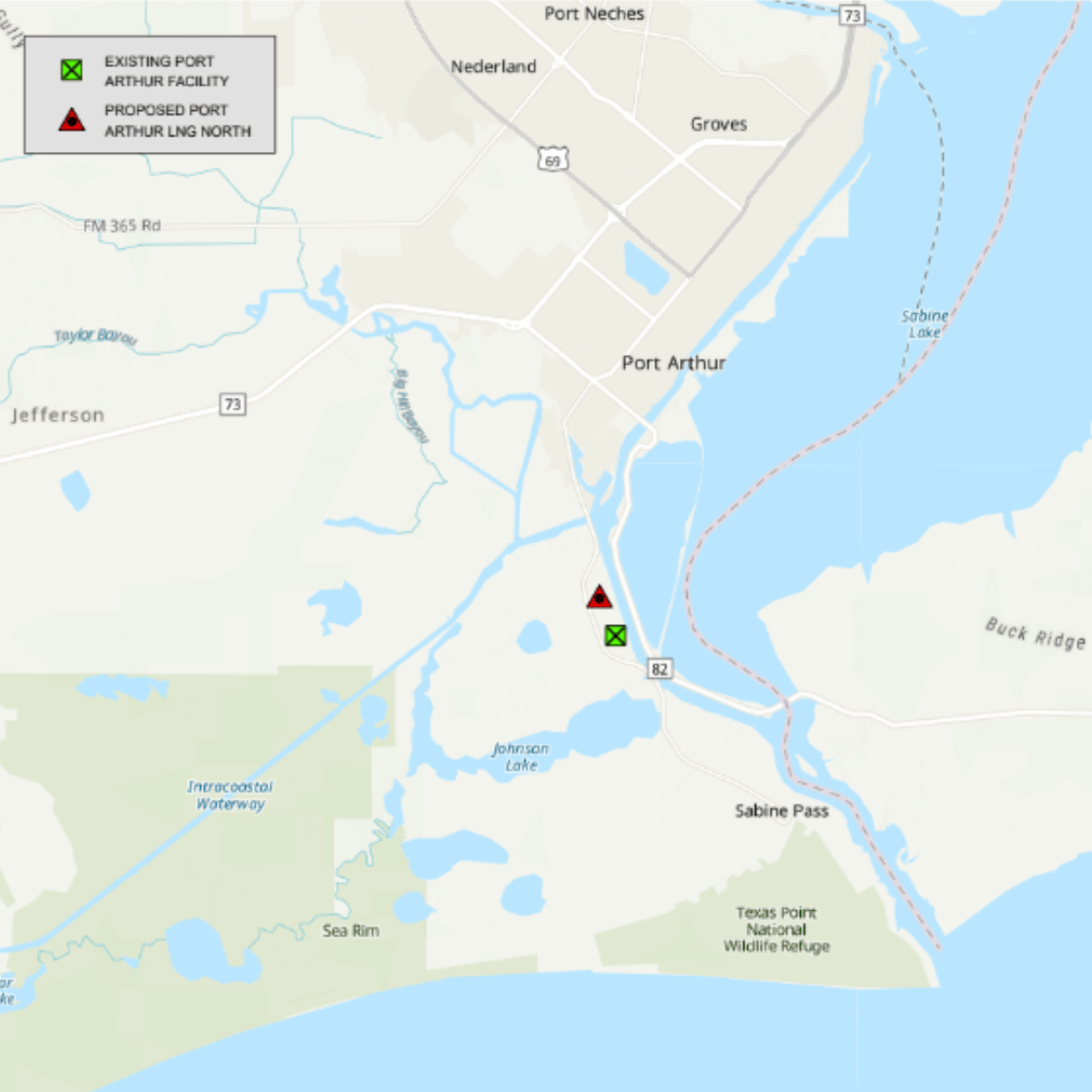
Two Gulf Coast export proposals enter early federal review. Pre-filing acceptance does not authorize construction or replace a final investment decision.
Federal pre-filing review is beginning for Sempra’s Port Arthur LNG North and the proposed Coastal Bend LNG development. The milestone advances two large Gulf Coast export concepts into an early agency-review process; it does not authorize construction.
The developers describe approximately 26 million tonnes per annum at Port Arthur North and 19.2 million tonnes per annum at Coastal Bend. Those figures total 45.2 Mtpa of proposed capacity, with separate schedules, engineering teams and approval paths.
Project at a Glance
- Port Arthur LNG North:
- Approximately 26 Mtpa; four liquefaction trains
- North marine scope:
- Three LNG storage tanks and two marine berths
- Coastal Bend LNG:
- Approximately 19.2 Mtpa planned
- Coastal Bend engineering:
- KBR and Técnicas Reunidas
- Coastal Bend target:
- First LNG around 2031, subject to approvals and FID
- Current stage:
- Federal pre-filing review
Port Arthur North: Process and Marine Construction
The North concept includes four liquefaction trains, three LNG storage tanks and two marine berths. Sempra intends to sequence construction after Phase 2 transitions into operation, potentially retaining an experienced workforce.
Bechtel’s EPC role on the earlier phases does not establish an appointment for North. The North EPC contractor has not been publicly confirmed in the material reviewed for this update.
Coastal Bend: FEED Team Identified
KBR and Técnicas Reunidas hold front-end engineering and design scope. They are expected to transition into EPC if a positive final investment decision is taken, a conditional pathway rather than a full construction start.
Coastal Bend targets an approximately four-year construction period and first LNG around 2031. Regulatory approvals and FID remain essential before that schedule becomes an executable construction program.
The Potential Trade Pipeline
LNG delivery involves civil foundations, process structures, piping, electrical and instrumentation work, storage systems and marine construction. These proposals could support substantial trade demand, but the current milestone concerns review and engineering.
Environmental-review milestones, firm EPC commitments and investment decisions will make the pipeline clearer. Package awards will be more actionable than treating all proposed export capacity as work already released to contractors.