
$2.4B Transfer Advances Encinal’s $22.3B Power Megaproject
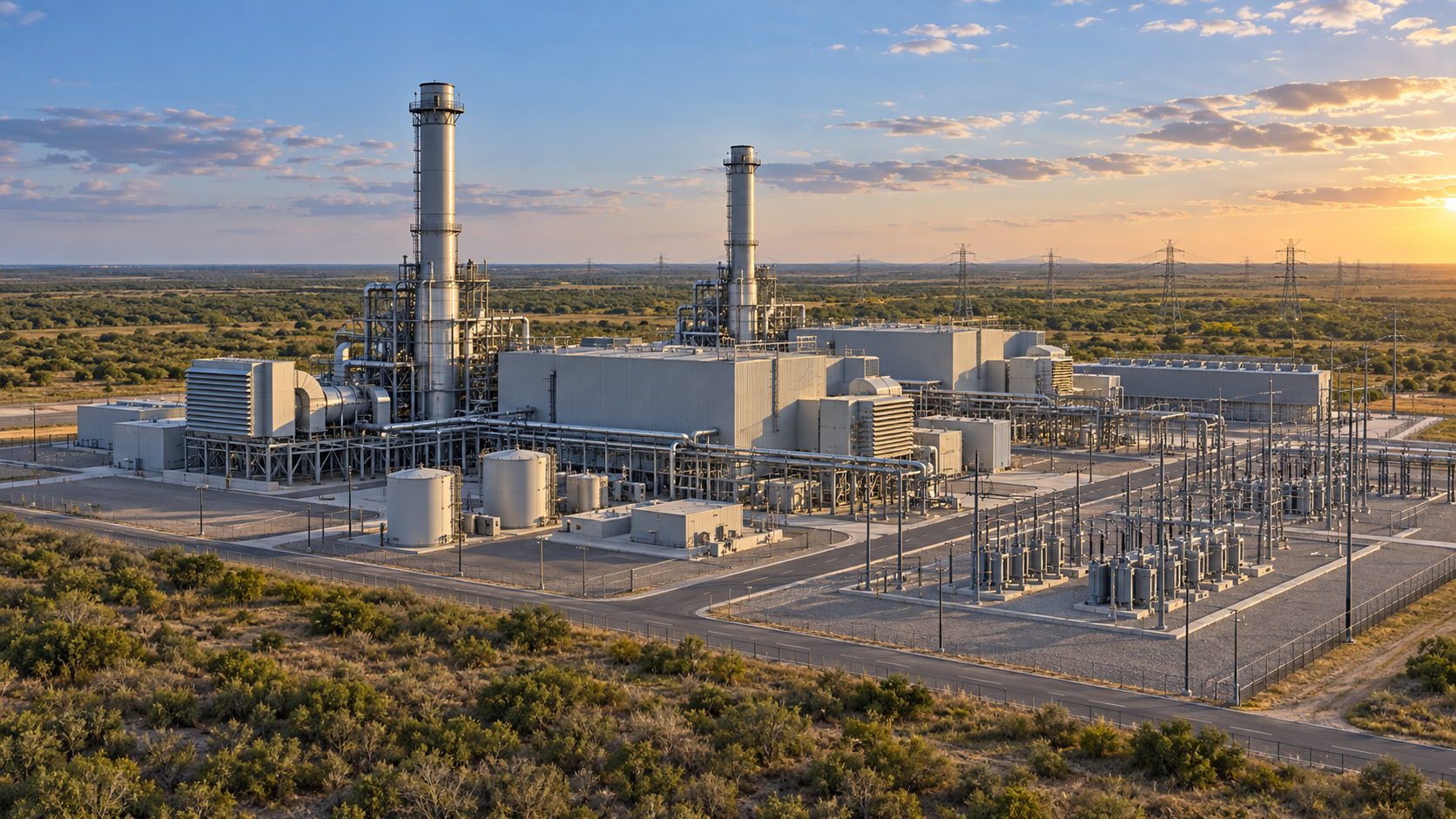
South Korea has transferred the first $2.4 billion for Project Star. The financing milestone brings fresh momentum to a planned 6.47GW power campus serving an adjacent 5GW data-center development, with first generation targeted for 2029.
Project Star has moved beyond another investment announcement. South Korea’s finance minister confirmed on October 6 that $2.4 billion had been transferred to the United States on October 1 for the planned Encinal power development. The payment is a tangible financial milestone for a project intended to connect South Texas natural gas with the electricity demands of large-scale computing.
For construction businesses, the significance is the progression from an agreed investment framework toward implementation. It does not establish that the entire campus is financed, that every construction package has been awarded or that full field mobilization has begun. The next evidence to watch is how the capital commitment translates into equipment orders, approved work packages and dated construction milestones.
Project at a Glance
- Energy-campus investment:
- $22.3 billion
- Initial transfer:
- $2.4 billion, sent October 1
- Proposed generation:
- 6,472MW
- Adjacent digital campus:
- 5GW at full scale
- Operating targets:
- First phase 2029; full operation 2032
Three milestones, with different meanings
The Korean government outlined Project Star on September 22 as its first strategic investment project under the bilateral agreement. That announcement established a $22.3 billion gas-fired combined-cycle development and a 6,472MW generating target. It set out a phased operating schedule: an initial phase in 2029 and full operation in 2032.
The development partners followed with a September 30 announcement describing the energy campus and neighboring digital infrastructure. The latest update concerns an actual transfer, subsequently confirmed to lawmakers. Announcement, transfer and commercial operation are separate milestones. Keeping those stages distinct gives readers a more useful picture than treating each update as a fresh groundbreaking.
The first payment is about 10.8% of the stated energy-campus cost, calculated by dividing $2.4 billion by $22.3 billion. That percentage describes money transferred relative to a headline investment figure. It cannot be used as a construction-completion percentage or as evidence that the remaining balance is immediately available to contractors.
Power generation and data centers are separate assets
Related Companies and NextEra Energy Resources are developing the generation campus with Lewis Energy Group. An adjacent, privately funded Related Digital campus is planned for 5GW of data-center capacity. The partners intend the generation development to serve that load and supply surplus electricity to the grid.
The difference between those two capacity figures matters. Generating capacity describes the supply side; a digital-campus figure describes intended demand or development capacity. Simply subtracting one from the other does not establish a guaranteed amount of electricity available to other customers at every hour. Operating conditions, equipment availability and the actual pace of tenant demand will matter.
The $22.3 billion figure should therefore remain attached to the announced energy infrastructure. There is no basis here for assigning it to an individual data-center building or presenting it as a fully priced combined construction budget for every asset on both sites.
What combined-cycle generation means for construction
Combined-cycle plants recover heat from a gas turbine’s exhaust to produce steam for a second generating cycle. The Department of Energy describes that heat recovery as a way to extract more electricity from the original fuel input. It is a useful explanation of the technology proposed here, rather than confirmation of Project Star’s final equipment configuration.
TCH’s construction assessment is that this creates several interdependent workstreams. Turbine installation needs foundations and delivery access. Heat-recovery and steam systems require coordinated mechanical work. Electrical systems, controls and commissioning then have to operate together. A building envelope alone is a poor measure of progress on an energy project because an apparently complete structure may still await critical process equipment or testing.
That is why a future procurement update should identify its exact package and phase. A turbine order, site-preparation award and full engineering-and-construction contract would each reduce different uncertainties. No complete public package schedule or independently verified EPC appointment is established in this update.
A South Texas supply base, with international procurement ambitions
Lewis Energy is providing the land, natural gas and produced-water resources described by the partners. NextEra reports more than $20 billion of prior Texas investment and over 9GW of operating generation in the state. The development is therefore being advanced by businesses with existing regional assets, rather than solely by a newly announced investment vehicle.
Korea’s finance ministry also identifies opportunities for Korean participation in generation equipment, engineering, construction and long-term operations. That is an intended procurement opportunity, not an award list. Company names and contract values should be attached to actual appointments when those become available.
For local businesses, the practical issue is where a package will be bought and delivered. International equipment supply can coexist with local foundations, transport, installation and maintenance. The presence of an overseas investor does not reveal which of those scopes has already been committed, nor does a domestic developer automatically mean every purchase will be sourced locally.
The grid connection still deserves its own scrutiny
ERCOT’s published large-load process separates eligibility, verification and interconnection work. Its June explanation of Batch Zero distinguishes genuinely islanded facilities with no grid connection from projects interacting with the system. Project Star’s stated intention to supply surplus generation makes the electrical interface an important part of the development story.
That context does not establish Project Star’s particular queue classification or approvals. It does explain why an investment transfer cannot substitute for an interconnection milestone. A construction schedule needs to coordinate both the assets within the site and the conditions under which electricity can move beyond it.
The same principle applies to the neighboring computing development. Its buildings, power availability and commissioning sequence must align if installed space is to become usable capacity. A headline gigawatt figure says little about the timing of the first usable block.
What would demonstrate the next step
The partners forecast approximately 8,400 workers at peak construction and around 170 permanent jobs at the power campus. Those are development forecasts, not a current headcount. First generation remains targeted as early as 2029, subject to permits and approvals.
The most informative follow-ups will be a dated first-phase construction schedule, confirmed equipment and delivery appointments, the relevant permitting milestones and the first independently documented field work. Those records would show how the financing milestone is becoming an executable project. Until then, the transfer is substantial progress in its own right, without needing to turn it into a claim that the entire campus is already under construction.
Explore the project overview, dated updates and delivery milestones in Project Insights.
Explore project insights →