
$264.5M Solar and Battery Project Heads to Bowie County Vote
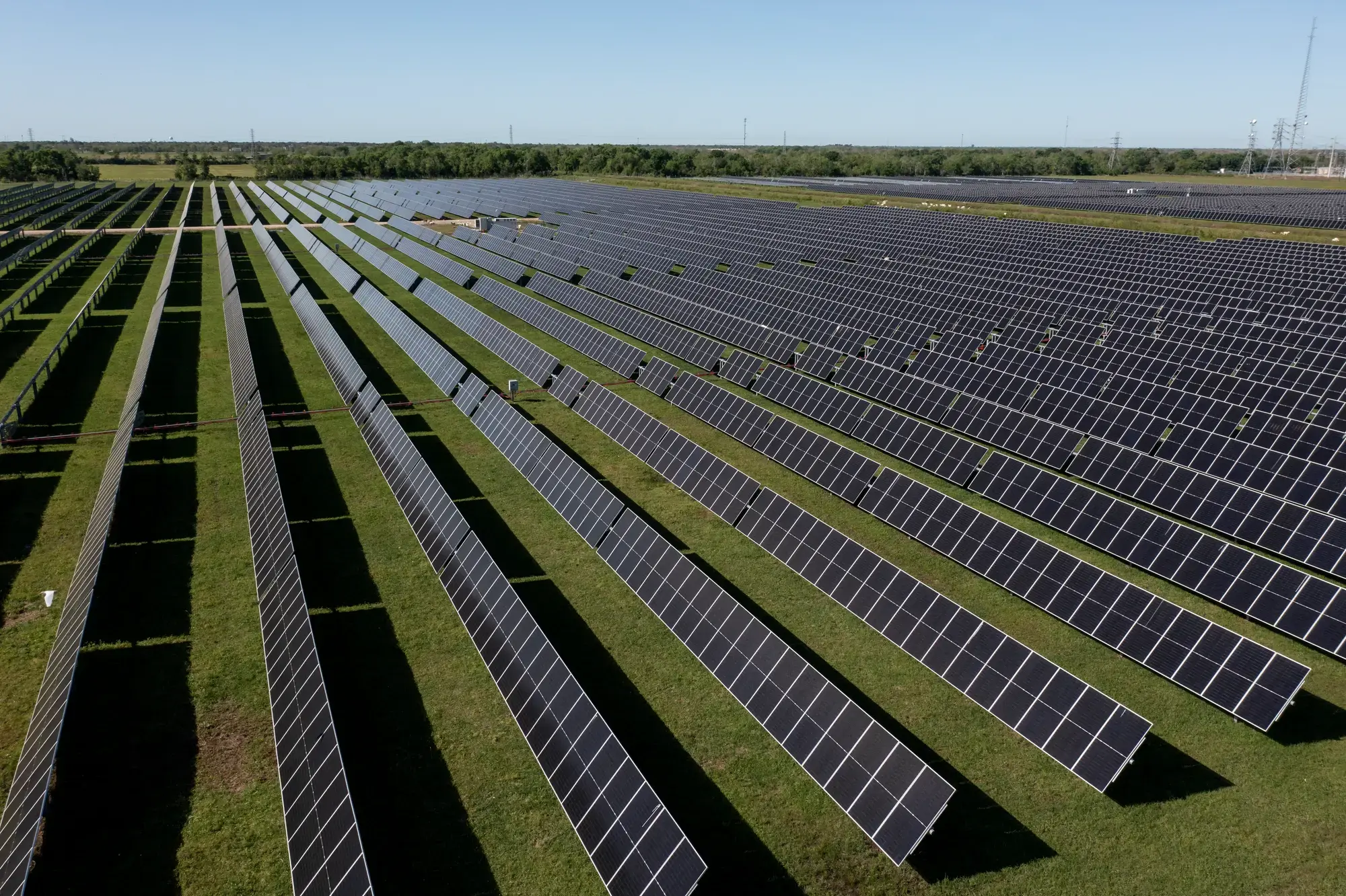
A 200MW solar proposal with two-hour battery storage faces county decisions on its tax agreement, reinvestment zone and road use. Grid documents reveal a separate high-voltage construction workstream.
Red Barn Solar is approaching a consequential local decision in Bowie County, where commissioners are scheduled to consider agreements supporting a proposed $264.5 million solar and battery development north of New Boston and Hooks. The October 13 meeting brings together three pieces of the project’s development framework: a reinvestment zone, a road-use agreement and a proposed ten-year property-tax abatement. The morning preview precedes the scheduled vote; no approval is being reported here.
The proposal combines a 200MW solar installation with a 100MW battery capable of storing 200MWh. The initial site covers approximately 3,425 acres. Those dimensions make this a substantial land, electrical and logistics program, but they describe different things: generation output, battery power, stored energy and site area. None is a substitute for the final construction footprint or a released package of work.
Project at a Glance
- Proposed investment:
- $264.5 million
- Solar:
- 200MW in the county application
- Storage:
- 100MW / 200MWh proposed
- Site:
- Approximately 3,425 acres
- County meeting:
- October 13, 9am Central; decision pending
A local decision with practical construction consequences
The three county actions have separate purposes. The proposed reinvestment zone and abatement concern the local investment framework, while road-use arrangements address how development interacts with public infrastructure. For a large rural construction site, agreed access routes and the condition of approach roads can influence delivery planning before the first solar panel arrives. Heavy equipment, bulk materials and electrical plant require different transport arrangements from the light vehicles used during long-term operation.
An affirmative county decision would be meaningful, but would not by itself announce financial close, an engineering-procurement-construction contract or a notice to proceed. Readers looking for an executable construction program should distinguish the incentives process from the subsequent commercial commitments. The developer’s proposed investment is a project-level figure, not the value of an awarded civil, battery or high-voltage contract.
Two schedules need to be reconciled
The county application anticipates a third-quarter 2027 construction start and full operation in the fourth quarter of 2028. An earlier interconnection agreement uses a November 2027 commercial-operation target. The later local application provides the more recent development timetable in the material reviewed, but the differing dates remain unresolved. Neither should be converted into a guaranteed opening date.
This matters because a generating plant and its grid connection must progress together. Site preparation can advance before all electrical infrastructure is ready, while energization and commercial operation depend on a different series of completed works and tests. A credible update would identify which date now governs equipment deliveries, connection works and commissioning, and whether the interconnection milestones have formally changed.
The grid work extends beyond the solar field
Southwest Power Pool’s filed interconnection agreement names Red Barn Solar as the customer and Southwestern Electric Power Company as transmission owner. It specifies 201.6MW of network-resource interconnection service, limited to that amount at any time, and connects the scheme to the Orynth 345kV station on the Northwest Texarkana–Valliant line. The agreement describes an option-to-build arrangement for transmission-owner interconnection facilities and stand-alone network upgrades.
Under the filed arrangement, the customer takes responsibility for designing and building defined connection assets to the transmission owner’s requirements. The agreement also calls for approved contractors and vendors, acceptable transferable warranties, permits and engineering submissions. It establishes obligations and interfaces; it does not identify a publicly verified contractor award. The 201.6MW grid-service figure should remain separate from the county application’s rounded 200MW solar description.
For construction planning, those interfaces deserve as much attention as the panel layout. A finished array cannot establish commercial readiness without the required connection, protection, control and testing work. The documents connect this development to the Southwest Power Pool system; there is no verified basis here for assigning its output to a named data-center customer.
The grid filing also itemizes transmission-line work into the new station, relay upgrades and engineering oversight. These are identifiable activities beyond the solar array itself. Their presence in an interconnection agreement helps define the network interface, but the listed estimates are not evidence of awarded subcontracts or a final project-wide cost breakdown.
What the battery adds to delivery
The proposed 100MW/200MWh storage specification describes a nominal two-hour system at rated power. It does not mean another 100MW of continuous solar generation. Battery storage shifts when energy can be delivered, and its civil, electrical, controls and safety requirements need to fit the wider plant design.
Foundations and equipment access, cable routes, power conversion, communications and emergency-response provisions can sit across several suppliers’ responsibilities. A battery supplier, installation contractor and plant integrator may have different obligations. Until appointments are disclosed, those scopes are potential workstreams rather than open tenders or confirmed awards.
A Texas development platform behind the proposal
Red Barn Solar is associated with TotalEnergies through the Core Solar development platform. TotalEnergies acquired Austin-based Core Solar in 2022, adding a development portfolio exceeding 4GW across solar and storage projects in several states. That history explains the corporate connection; it does not establish that all projects in the acquired portfolio share the same delivery team, equipment or financing.
The separate TotalEnergies–KKR portfolio transaction announced October 12 should not be attached to Red Barn without project-specific confirmation. That announcement covers three solar assets in Texas and Ohio. Shared corporate ownership and a Texas location are insufficient to conclude that Red Barn is one of those assets.
The milestones that would move the project forward
The immediate next evidence is the county’s recorded action and the final form of any approved agreements. After that, the most useful construction updates would identify the revised integrated schedule, financing commitments, the prime delivery structure and the division of responsibility between generation, storage and connection works.
Procurement announcements should be read against those boundaries. A module purchase would not settle the battery package, and a connection contract would not establish full site mobilization. A dated notice to proceed, accompanied by defined scope and commissioning milestones, would provide a clearer signal of when the proposed investment becomes sustained construction activity.