
$4.8B Filed for Two Crusoe-Linked West Texas Data Centers
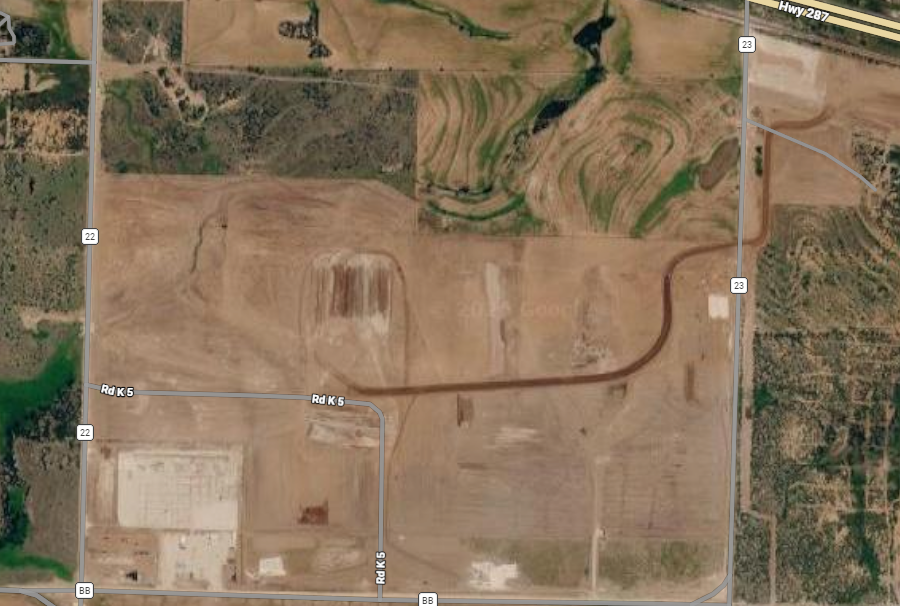
Two Project Hyper Spur buildings total more than 1.5 million square feet, with filed starts in January 2027 and completion targets in 2029.
Two Project Hyper registrations put $4.8 billion in estimated construction value against more than 1.5 million square feet of proposed data-center space near Jayton, adding a substantial Kent County development to the West Texas construction pipeline. Both buildings are scheduled to start in January 2027, with filed completion targets in May and June 2029.
The figures come from separate Texas Department of Licensing and Regulation records registered October 1. Data Center Dynamics links the development to Crusoe, although the registrations identify individual owner entities rather than naming Crusoe as developer. The distinction is important: the buildings and their filed estimates are documented, while the wider commercial relationship still needs project-specific confirmation.
Project at a Glance
- Two filed estimates:
- $2.4 billion per building; $4.8 billion combined
- Combined floor area:
- 1,518,524 SF
- Building 1 schedule:
- January 31, 2027–June 7, 2029
- Building 2 schedule:
- January 13, 2027–May 25, 2029
- Status:
- Registered; filed schedules, not confirmed field starts
Project Hyper: team and construction timeline
Checking your membership…
Explore both Jayton buildings, their separate schedules and the milestones to watch in the full Project Insight.
Two buildings, two delivery schedules
Spur Building 1 is registered at $2.4 billion and 759,262 square feet, with a January 31, 2027 start and June 7, 2029 completion. Spur Building 2 carries the same estimated cost and floor area, but an earlier January 13 start and May 25 completion. Together, their registered area is 1,518,524 square feet.
Both records describe single-story facilities containing data-center space, offices and supporting accommodation. They place the development near Country Road 233 and P2390 in Jayton. The filings identify Spur DC Owner 1 LLC and Spur DC Owner 2 LLC as the respective property owners and leave the tenant unassigned.
These are owner-supplied construction estimates and scheduled dates. They do not establish that financing has closed, that the full amount has been awarded to builders, or that physical work has begun. Nor should a filed completion date be presented as a guaranteed date for customer computing operations. Building completion, energization, testing and operational handover can be separate milestones.
What the $4.8 billion figure actually measures
The headline total is the sum of two distinct $2.4 billion registrations. It is not a fundraising announcement. Readers assessing the project should also resist treating that number as an available contract package: the records do not break the estimate into structures, electrical infrastructure, mechanical systems or customer equipment.
TCH's construction assessment is that the next valuable disclosure would be a package-level account of the scope. That would show which work sits within each building registration and which infrastructure serves both. Without it, a simple comparison with another campus can obscure differences in what each estimate includes.
The identical costs and floor areas point to closely related building programs, but they do not by themselves prove an identical internal configuration. A repeated building envelope can accommodate different fit-out sequences or customer requirements. Those details become commercially useful when supported by procurement documents or a confirmed delivery announcement.
Why the Crusoe connection matters
Data Center Dynamics reports the Jayton buildings as a Crusoe development and interprets their Project Hyper naming as a possible satellite connection to its Childress program. That is a reported connection, rather than a statement in the two Jayton registrations. TCH is keeping that qualification explicit.
Crusoe and Lancium's own July announcement provides firmer context for Childress. It describes a 1.0-gigawatt campus on 270 acres, with Lancium responsible for the land and energy infrastructure and Crusoe designing, building and operating the data center. Some secondary coverage uses 1.4GW; the company's published announcement says 1.0GW.
That Childress description cannot simply be transferred to Jayton. The Jayton records reviewed here do not establish a power-capacity figure, identify a hyperscale customer or confirm a cooling design. Shared naming is a reason to investigate how the developments connect, not a substitute for an owner statement defining the relationship.
The delivery questions behind the scale
For construction readers, the difference between a large registration and an executable program is the sequence of decisions that follows it. Land preparation, utility design, long-lead equipment procurement and building delivery must be coordinated. A schedule can look achievable at the building level while remaining dependent on infrastructure outside the immediate construction footprint.
Power is one of the first questions to resolve. A floor-area figure does not reveal the electrical load of the computing systems it will contain. Until the developer discloses capacity and supply arrangements for Jayton, it would be speculative to describe a particular substation, generating plant or interconnection as confirmed project scope.
The same discipline applies to water and cooling. Crusoe has discussed closed-loop, non-evaporative cooling for Childress. That provides context for its development approach, but does not establish a Jayton specification. Site-specific design information is needed before assigning a cooling system, water demand or mechanical package to these buildings.
How to follow procurement without overstating it
The January start windows create a useful period to watch for delivery appointments and early-work announcements. They do not demonstrate that trade packages are open for bidding today. A contractor's work on another Crusoe campus also does not establish an appointment in Kent County.
TCH will distinguish an appointed construction team from companies associated with other sites or general recruiting activity. The most useful evidence will identify the building or site, the contractual role and the actual scope. That approach matters especially for a development where two buildings may have separate schedules and shared infrastructure.
The proposed scale makes Jayton a strong candidate for a dedicated Project Insight as further evidence emerges. Building-specific updates would allow readers to follow appointments, enabling works, structure, fit-out and commissioning without confusing a campus announcement with an awarded package.
What comes next
The immediate milestones to watch are an owner or developer statement confirming the Jayton program, a defined power strategy, named delivery appointments and evidence of site mobilization. Any revised state filings should be compared with the October registrations so changes in area, cost or schedule are reported clearly.
For now, the significance is substantial but specific: two registered buildings, more than 1.5 million square feet and $4.8 billion in estimated construction costs, with work scheduled for 2027–29. That is enough to put Jayton firmly on the construction watchlist. It is not yet enough to treat every part of the wider campus plan as settled.
Explore the project overview, dated updates and delivery milestones in Project Insights.
Explore project insights →