
Lockheed Martin Announces $300M Texas Manufacturing Investment and 2,000 Jobs
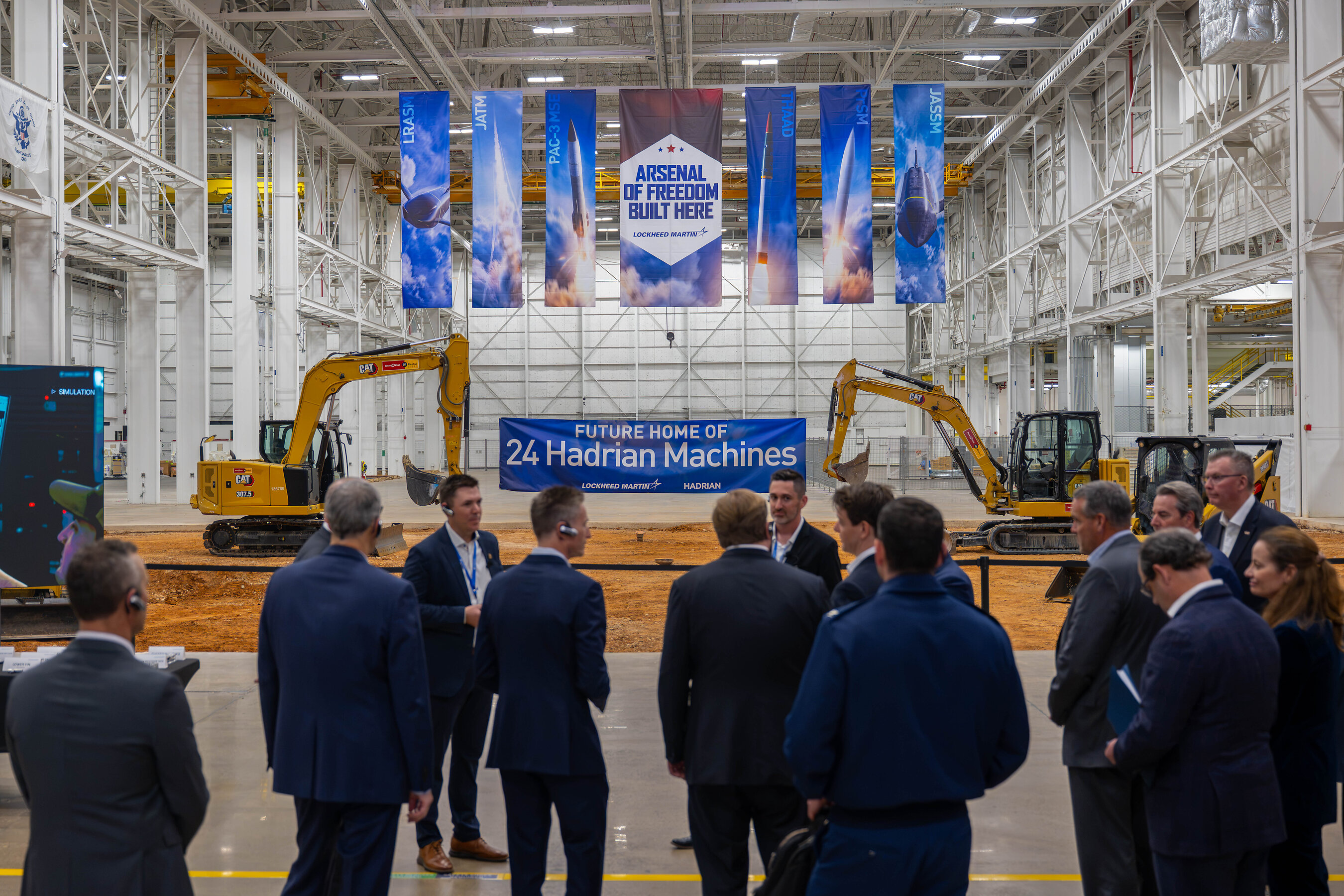
A ribbon-cutting marks expanded manufacturing space in Grand Prairie, with further automation and equipment installation continuing into 2027.
Lockheed Martin announced a $300 million investment in its Grand Prairie manufacturing operations on October 14, alongside plans for 2,000 jobs across Texas. The company marked the expansion of an advanced manufacturing facility with a ribbon-cutting, bringing a substantial building program into the next stage of equipment installation and production readiness.
The physical addition combines approximately 100,000 square feet of newly built space with 85,000 square feet converted from office use. Together, those changes take the manufacturing footprint to more than 735,000 square feet. The larger number describes the expanded footprint, not 735,000 square feet of entirely new construction. Likewise, the investment covers a broader manufacturing program rather than a disclosed building-only contract.
Project at a Glance
- Investment announcement:
- $300 million
- Expanded manufacturing footprint:
- More than 735,000 SF
- New and converted space:
- 100,000 SF new; 85,000 SF converted
- Texas employment announcement:
- 2,000 jobs
- Automated cell target:
- Early 2027
A completed building milestone, with production work still ahead
A ribbon-cutting is an important point in an industrial expansion, but the next stage can be just as consequential for delivery. Precision equipment needs to be installed, connected and tested before an enlarged facility can reliably produce at its intended rate. Lockheed’s announcement identifies continued investment in production machinery, making clear that the physical expansion and the manufacturing ramp are related but separate milestones.
For construction businesses, that distinction shifts attention from the shell to the interfaces inside it. Equipment layouts, electrical distribution, ventilation, material handling and access for maintenance have to work together. These are typical industrial-delivery requirements, not a list of newly advertised packages at Grand Prairie. The announcement does not identify the building general contractor or separate mechanical and electrical appointments.
Hadrian’s role is manufacturing automation
Hadrian will supply a highly automated 24-machine manufacturing cell, with operation targeted for early 2027. Lockheed Martin’s production workforce is expected to operate it. Hadrian is identified as a manufacturing-equipment partner; that role should not be confused with appointment as the construction general contractor.
The relationship predates this ribbon-cutting. A December 2025 collaboration announcement described scalable machining and inspection capabilities intended to improve production capacity and manufacturing efficiency. The October update provides a more tangible installation milestone: a defined cell and an intended operational window within the expanded facility.
Installing an integrated cell involves more than positioning individual machines. The production sequence, inspection process and movement of work between operations must function as one system. Successful commissioning therefore provides a different measure of progress from the completion of walls, roofs or floor space.
New construction and conversion create different delivery challenges
The mix of newly built and repurposed space is central to this project. Converting offices into manufacturing can require different building services, equipment support and internal circulation. Newly built production areas offer more freedom to arrange those systems, while reused space has to be reconciled with an existing structure. Lockheed has not published a package-by-package breakdown of those works.
The 185,000-square-foot combination gives a clearer picture of the expansion than the overall campus footprint alone. It also explains why the $300 million announcement should be read as an investment program. Production equipment, integration and other manufacturing expenditures can sit alongside building work; a single construction contract value has not been disclosed.
An established Grand Prairie manufacturing base
Grand Prairie is already a major home for Lockheed Martin’s Missiles and Fire Control business. The company describes its local headquarters campus as covering more than 300 acres. The expansion therefore builds on an established manufacturing and engineering operation rather than creating a completely separate industrial location.
Earlier investments help explain the direction of travel. In October 2024, Lockheed opened an Advanced Manufacturing Technology Center in Grand Prairie to support the deployment of new production methods, workforce training and collaboration. In a separate November 2024 update, the company described 16,000 square feet of additive-manufacturing space, including large-format equipment and supporting heat-treatment and inspection capabilities.
Those earlier facilities should not be added to the current expansion as if they were newly announced October 2026 work. They show a continuing effort to connect manufacturing technology with production capacity. The latest investment extends that pattern at a site where specialist processes and trained staff are already concentrated.
The technology center is being used to test production approaches
An April 2026 company update described an assembly demonstration at the Advanced Manufacturing Technology Center using modular tooling, standardized fixtures and additive manufacturing. That demonstration concerned a separate program, but it illustrates the center’s function: evaluating how products can be built and how processes can move toward repeatable production.
For the wider industrial supply chain, such facilities create a bridge between engineering development and factory deployment. A process proven in a demonstration environment still needs equipment, quality controls and an appropriate operating layout when it moves into sustained production. The Grand Prairie expansion is relevant because it adds physical capacity alongside investment in those production methods.
Jobs and national investment need separate boundaries
The 2,000-job figure applies to Texas and forms part of a broader announcement covering 6,000 U.S. jobs. It is not a count of construction positions, nor does the announcement establish that every Texas role will be located in the newly expanded Grand Prairie space. Readers assessing local labor demand should keep those boundaries intact.
Lockheed also places its expansion within a national manufacturing investment program of $8 billion to $9 billion through 2030 across more than 20 sites. The Grand Prairie announcement is one component of that program. National expenditure should not be presented as additional Texas construction value.
The next measurable milestones
The most useful near-term update will be whether the automated cell reaches its early-2027 operating target. A confirmed commissioning milestone would show that the equipment has moved beyond installation into productive use. Further detail on the building and installation teams would also clarify which businesses delivered the physical expansion.
For now, the confirmed story is substantial: a $300 million manufacturing investment announcement, a ribbon-cutting for new and converted production space, and a defined automation program still to come. The project demonstrates how Texas industrial development increasingly combines construction with the systems and workforce needed to make that floor space productive.
Explore the project overview, dated updates and delivery milestones in Project Insights.
Explore project insights →