
Alamo Acquires Six DFW Concrete Plants
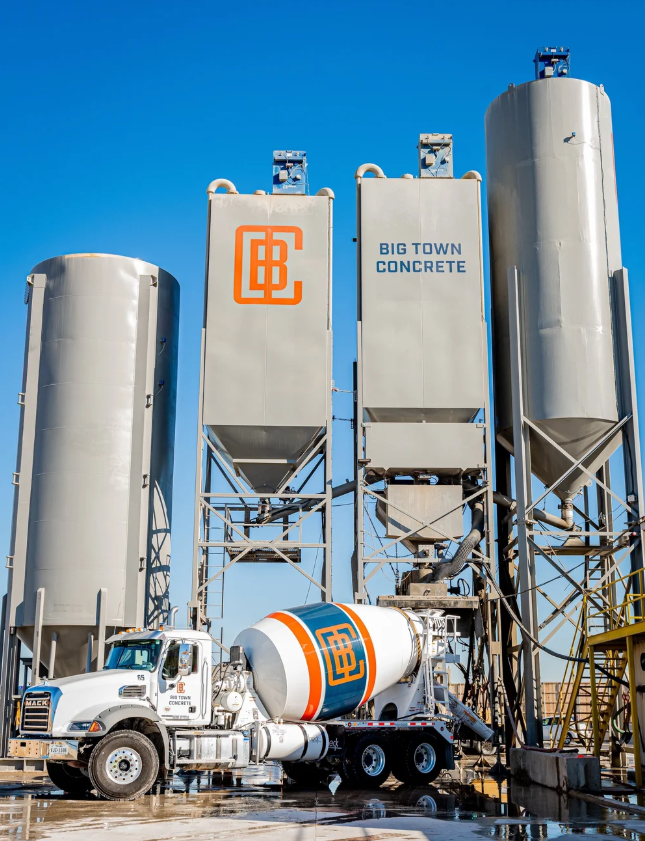
The completed Big Town Concrete asset purchase takes Alamo into the Dallas–Fort Worth ready-mix market, with existing management staying in place.
Alamo Concrete Products announced October 19 that it had completed the purchase of Big Town Concrete’s assets. The six ready-mix plants bring the Buzzi subsidiary into the Dallas–Fort Worth ready-mix market.
Big Town’s management will continue overseeing day-to-day operations as a division of Alamo. The announcement identifies approximately 400,000 cubic yards of combined annual production, rather than a construction value or the size of a newly commissioned plant.
Project at a Glance
- Transaction:
- Completed asset acquisition
- Ready-mix plants:
- Six
- Reported annual production:
- Approximately 400,000 cubic yards
- Purchase price:
- Not disclosed
A North Texas operating platform
Alamo is a wholly owned subsidiary of Buzzi. Its October 19 announcement describes the purchase as an entry into the DFW ready-mix market and a platform for further growth across North Texas. Big Town’s retained management will operate the business as an Alamo division, providing continuity as ownership changes.
The six plants are existing operating assets. Their estimated combined annual production of 400,000 cubic yards is a measure of the business acquired; it is not an announcement of six new factories or a commitment to add that volume of new capacity. The purchase price was not disclosed in the announcement.
Connecting cement distribution with ready-mix supply
Buzzi already operates a cement terminal in Dallas and says another terminal is under construction north of the DFW metropolitan area. The company presents the acquisition as an opportunity to connect that upstream cement supply with downstream ready-mix sales and delivery.
Cement and ready-mix concrete serve different roles in that chain. Cement is a binder used in the concrete mix; a ready-mix operation combines the specified materials and delivers concrete to the job. Control of both activities can give a supplier more direct coordination between material sourcing and customer orders, although the announcement does not promise particular pricing or delivery improvements.
What it means for construction buyers
For contractors procuring concrete, the immediate change is the ownership and organization behind an existing local supply network. Keeping the management team in place may help preserve operating knowledge and customer relationships during integration. It does not remove the need for project teams to confirm mix requirements, delivery arrangements and commercial terms for each job.
A count of acquired plants is also not a measure of spare capacity available to a specific project. Plant workload, the required specification and delivery logistics still determine whether a supplier can support a proposed pour. The company’s annual production estimate should therefore be read as business scale, rather than as a guaranteed allocation to future North Texas construction.
A separate construction development to follow
The terminal north of DFW remains a distinct construction story within the wider supply expansion. The acquisition announcement does not provide its precise site, construction budget, completion target or appointed delivery team. Those details will need separate verification before the terminal can be presented as a fully documented project opportunity.
Further updates should track the integration of the acquired plants and any specifically announced investments at those facilities. At present, the confirmed milestone is completion of the asset purchase. No plant expansion, refurbishment package or additional construction award should be inferred from the transaction alone.