
$7.5B Big Bend Contract Portfolio Faces Construction Halt
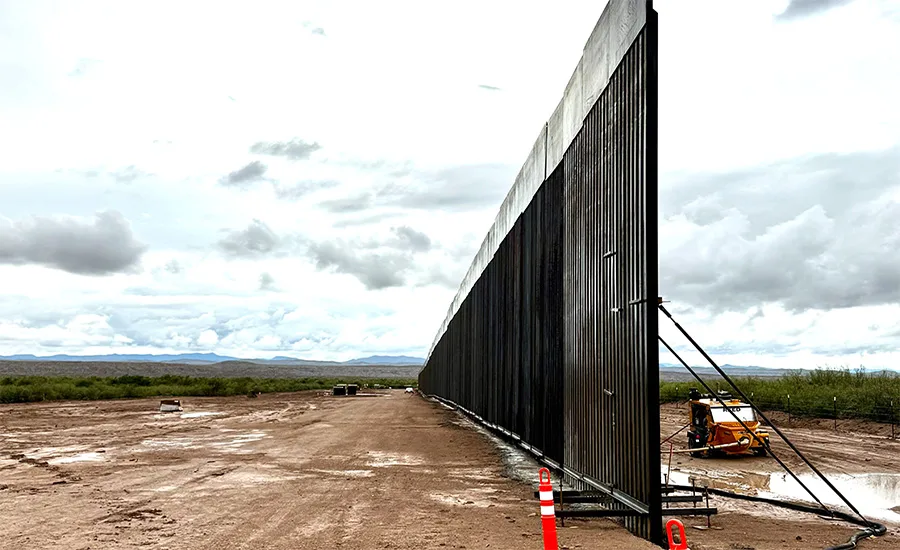
A federal injunction has changed the delivery outlook for five border-infrastructure contracts. The immediate questions concern lawful work, site protection and restart sequencing—not a confirmed cancellation of the awards.
The construction consequences of the Big Bend injunction are becoming clearer. Five federal border-infrastructure contracts with a reported combined value of approximately $7.5 billion sit within the affected sector. That makes the October 2 court order a significant delivery issue for an already mobilizing West Texas program, rather than simply a dispute over a future proposal.
The figure describes the reported value of a contract portfolio. It is not a measured financial loss, an estimate of work completed or a cancellation payment. No verified revised completion schedule has been established in the material reviewed. For the construction industry, the urgent issue is how an interruption changes the sequence of work and the instructions under which each package can proceed.
Project at a Glance
- Reported contract portfolio:
- Approximately $7.5 billion across five awards
- Court order:
- October 2 preliminary injunction
- Area:
- Border Patrol Big Bend Sector
- Restart:
- No verified date
Contractor contracts
Explore the award-holder breakdown, contract values and construction timeline with monthly or annual membership.
Explore Project Insights →What the court actually ordered
U.S. District Judge Kathleen Cardone issued a preliminary injunction on October 2 in Friends of the Ruidosa Church and others’ case against federal officials. The signed order restricts border barriers, related infrastructure and construction or ground-disturbing activity in the Big Bend Sector until compliance with applicable laws or further court direction. It also stays the effect of the identified Big Bend waivers.
This is interim relief, not a final judgment resolving every claim. The order says a fuller explanation of the court’s reasoning will follow. Its geographic reach is the sector specified in the decision; it should not be described as a nationwide halt to border construction. Nor does the two-page order itself set a new construction program or give a date when work may resume.
An active program encounters a different delivery constraint
Public reporting indicates that CBP had confirmed the installation of 30-foot barrier panels began September 15 on a 47-mile Hudspeth County stretch. As of October 5, public reporting had not established answers about formal suspension directions, demobilization or revised contract schedules at that date. Those unanswered questions should remain unanswered in coverage; an injunction alone does not demonstrate where each crew or machine is now located.
TCH’s assessment is that the distinction between legal authority and field execution will determine the practical effect. A program can have a funded award, a mobilized team and material already procured, yet still lack permission to undertake the next activity. Conversely, the existence of a court restriction does not establish that every dollar of an award has already been spent or that every package has reached the same stage.
Why roads, drainage and enabling work matter
The February 17 federal waiver helps explain why the delivery implications extend beyond steel panels. Its description encompasses access, staging, earthwork, excavation and site preparation alongside physical barriers and roads. It also names drainage, erosion controls, lighting, cameras and sensors. These are interdependent pieces of an infrastructure program, not just accessories to a completed wall.
From a construction-planning perspective, access and staging determine how equipment and materials reach a workfront. Drainage and erosion controls affect the condition of disturbed land. Power and communications interfaces matter to installed surveillance systems. A constraint affecting one of those elements can interrupt a later activity even if the later activity uses a different crew or supplier. That is a sequencing risk, not a prediction that every listed system is being redesigned.
The practical question for each work area is therefore specific: what has been disturbed, what has been installed and what direction governs the next step? An aggregate contract figure cannot answer those questions. Package-level instructions, dated field records and approved schedules would provide a much more useful account of the interruption than a single percentage-complete estimate for the whole sector.
The regional concerns predate this ruling
In August, Senator John Cornyn asked DHS to consult local stakeholders before further barrier construction in the parks. His letter described concerns raised by sheriffs, county judges, landowners and park advocates. It pointed to the region’s remote terrain and steep river cliffs, as well as questions about wildlife, cultural sites, river access and tourism.
Those concerns matter to the infrastructure discussion because a route has to function in its actual setting. Access roads, lighting and maintenance corridors have a physical footprint and an operating purpose separate from the barrier itself. The senator’s request is evidence of an earlier call for consultation; it is not a permit decision, an engineering redesign or a substitute for the October court order.
For owners and delivery teams, the wider lesson is the value of making the purpose and limits of each work package understandable. A vehicle-control measure, a patrol road and a surveillance installation are different assets. Treating them as interchangeable can obscure both the intended security function and the environmental or community questions that attach to their locations.
Cost exposure requires evidence, not multiplication
A construction interruption can raise questions about equipment commitments, material deliveries and subcontract sequencing. But this coverage does not establish a claim, an agreed extension of time or a compensation award. Those outcomes depend on the governing documents, the circumstances of the interruption and subsequent decisions. Assigning a daily loss to the $7.5 billion headline would create precision the available evidence does not support.
TCH will distinguish contract value from expenditure and from any later quantified impact. The same discipline applies to procurement: an existing award is not an open invitation to bid, while an unresolved restart date is not proof that an award will be reprocured. Readers following the program should look for a documented change in scope or procurement status before treating it as a new opportunity.
The next milestones to watch
The most consequential next evidence will be further court directions and CBP’s implementation of them. A verified construction update should establish what work is permitted, which locations are affected and whether a dated schedule has changed. Site photographs can show physical conditions, but they cannot by themselves establish the legal authorization or contract direction behind an activity.
The current position is a substantial regional portfolio under a construction restriction, with important delivery details still unresolved. A restart announcement would need the same scrutiny as the halt: its scope, conditions and affected packages matter more than the headline alone. The contractor contract breakdown is available in the members-only Project Insight; unverified trade appointments have not been added to the project team.