
Harris County Advances $88M Community Solar and Storage Program
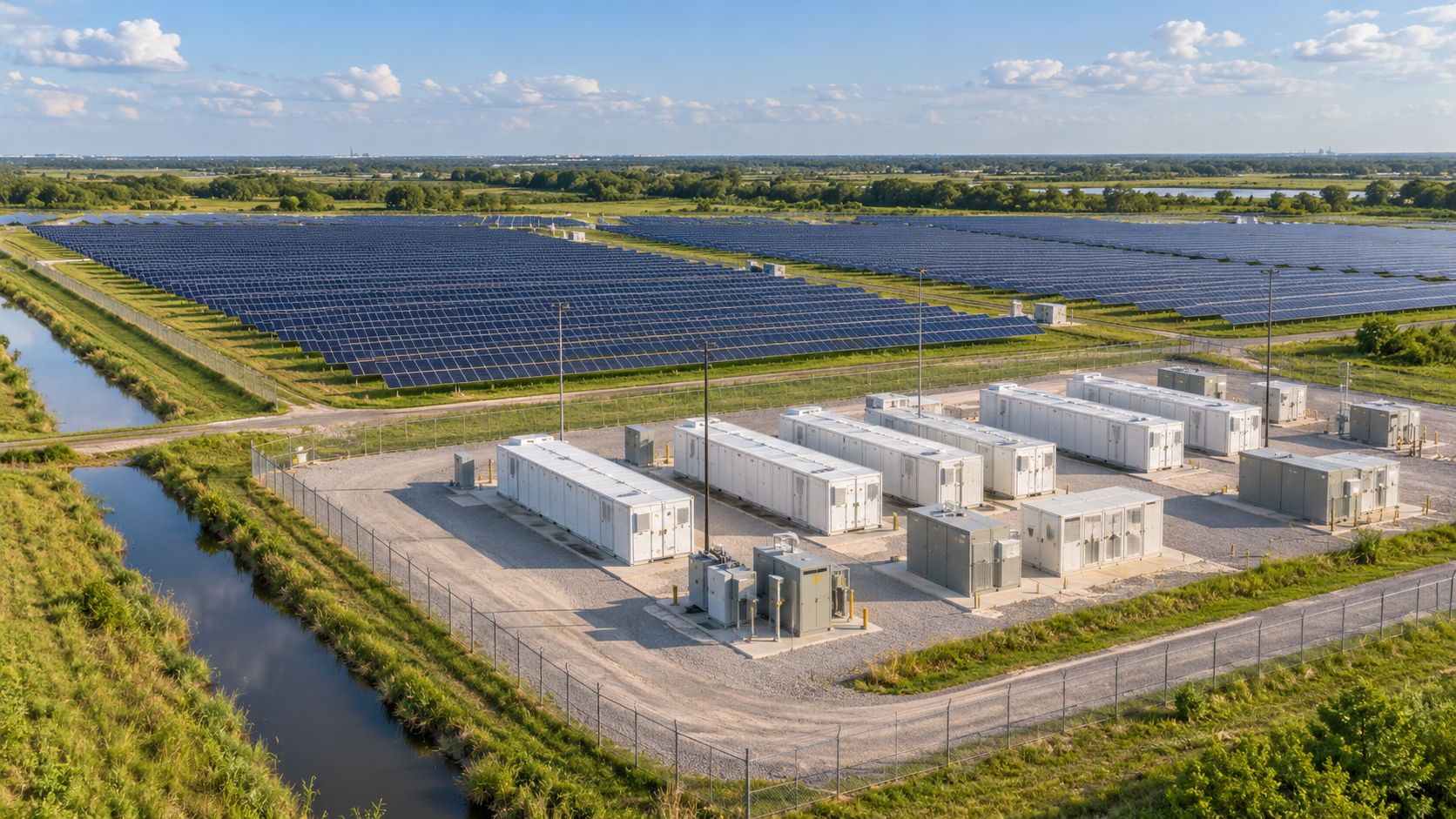
The Affordable Community Energy initiative is moving toward public-site solar construction and 2027 enrollment, with capacity figures that need to be read against the specific procurement stage.
Harris County’s Affordable Community Energy program is advancing a reported $88 million investment in solar generation and battery storage, intended to reduce electricity costs for qualifying households. The county’s current public program page describes up to 45 MW of solar and a target of approximately 9,500 households, with enrollment expected in 2027.
The construction model places generation on public sites rather than requiring participating households to install rooftop equipment. That makes delivery of the shared assets and the customer-benefit arrangements separate parts of the same program.
Project at a Glance
- Program:
- Affordable Community Energy
- Reported program value:
- Approximately $88 million
- Current public solar target:
- Up to 45 MW
- Households targeted:
- Approximately 9,500
- Enrollment:
- Expected in 2027
- Storage:
- March award description: at least 15 MWh; earlier procurement target: 20 MWh
Checking your membership…
Reconciling the capacity numbers
The available documents reflect different stages of development. Earlier county procurement material called for 45 MW of solar and 20 MWh of battery storage. The March 19 award description instead referred to seven initial sites, up to 40 MW of solar and at least 15 MWh of storage. The current public-facing page uses an up-to-45-MW solar target.
Those figures should not be combined into an assertion that a final 45-MW, 20-MW storage system has been installed. Megawatts measure power; megawatt-hours measure stored energy. The 20 figure in the earlier procurement material is an energy-capacity target in MWh, not a verified 20-MW battery rating.
The project should therefore be tracked site by site as designs and commissioning details become available. The differences in published program figures do not establish that an individual asset has been removed or enlarged. They show why a final installed-capacity claim needs a later, specific source.
Construction and household enrollment run on different tracks
The county describes an approximately 20% electricity-bill saving objective for participating households. That is a program goal, not a guarantee of a fixed dollar reduction for every customer. Actual participation and the eventual benefit depend on the enrollment and service arrangements.
For construction teams, the work concerns the physical generation and storage portfolio: site preparation, equipment installation, connections and acceptance. For residents, the relevant milestone is when the program can enroll eligible customers and deliver the promised benefit. A groundbreaking does not mean both steps are complete.
TCH’s assessment is that multi-site delivery makes consistent commissioning and reporting especially important. Progress at one location should not be described as completion of the whole portfolio.
What to watch as delivery progresses
The next useful disclosures are confirmed site capacities, storage energy and power ratings, energization dates and the enrollment timetable. Those will turn a broad program announcement into a clearer account of what has been built and when it begins serving households.
The program is a significant county-level energy construction initiative. Its current status deserves coverage, while the distinction between procurement targets, awarded scope and final installed equipment remains central to accurate reporting.