
ICON Raises $200M to Scale Austin-Made Construction Robots
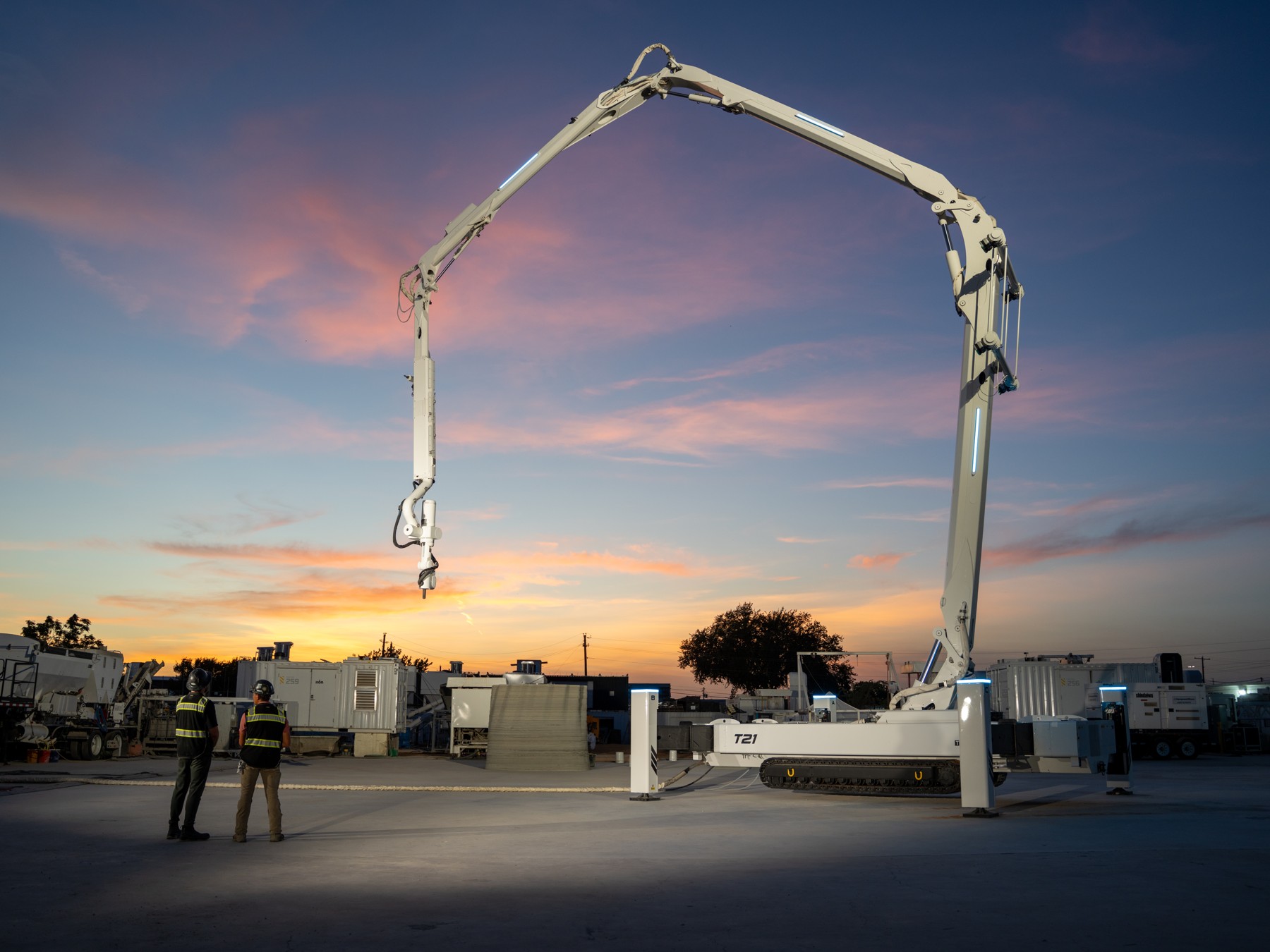
The funding will expand Titan production and support a planned Austin research facility, as ICON prepares to put its robotic wall-building systems into other builders’ hands.
Austin-based ICON has secured $200 million in Series D financing to expand production of its Titan robotic construction systems, develop a large-scale research facility in Austin and increase deployment of its technology. The October 13 announcement gives the company more resources for a transition that matters beyond its own building projects: supplying other construction businesses with the equipment, software and support to print structural wall systems.
Baillie Gifford and funds managed by BlackRock co-led the financing. The money is corporate investment, rather than a $200 million building contract or a disclosed budget for the research facility. For Texas construction firms, the immediate significance lies in manufacturing expansion and a growing equipment ecosystem; the size and procurement timetable of any associated real-estate project remain unannounced.
Project at a Glance
- Financing:
- $200 million Series D
- Announcement:
- October 13, 2026
- Manufacturing:
- Existing Austin factory
- Titan customer deliveries:
- Early 2027 target
- New R&D facility:
- Austin planned; site and completion date undisclosed
Austin remains the manufacturing base
ICON says Titan production will expand at its existing Austin factory. It also intends to open a large-scale research and development facility in the city. These are related investments with different purposes: manufacturing must produce repeatable equipment at volume, while research supports development, testing and future improvements.
The announcement does not identify the research site, its floor area, a construction budget or an appointed building team. It therefore does not establish whether delivery will involve a new building, an existing property or a combination of improvements. That distinction will determine the eventual mix of sitework, fit-out, building services and equipment installation.
Locating research and production in the same metropolitan area could make it easier to carry lessons from field deployment into equipment development. The test for the expansion will be how reliably that process supports customer machines, material supply and service as deployments spread across more locations.
From project delivery to equipment ownership
The financing follows ICON’s March launch of the Titan program, which allows builders to acquire its integrated construction system. The offering brings together the printer, software, materials, architectural support, training and ongoing service. That broad package reflects the fact that owning a robotic printer alone does not provide a complete construction operation.
At launch, ICON targeted first system deliveries for early 2027 and planned customer training from the third quarter of 2026. Those were announced targets; a training plan should not be treated as confirmation that every customer has completed instruction or received equipment. The October financing supports the next stage of scale-up ahead of the delivery window.
Builders taking equipment into their own operations will need to decide how it fits their project pipeline. Machine utilization, suitable designs, crew readiness, maintenance and the distance between jobs can all affect the economics. A system that works on a repeatable development may face a different operating pattern when deployed across scattered sites.
What Titan changes on a building site
ICON describes Titan as a mobile system intended for multistory construction. Its technology offering combines a robotic printer and material-delivery equipment with BuildOS software. The company’s published program also includes training in Austin and service support, showing how much of the commercial proposition sits around the machine itself.
Printed walls still have to connect with the rest of a building. Foundations must be ready for the selected wall design; openings and service routes must be coordinated; roofs, windows, doors, finishes and mechanical and electrical systems still require delivery. The construction schedule needs to account for those interfaces rather than measuring success solely by the time spent printing.
The company advertises the ability to print the walls of a 2,500-square-foot home in less than seven days. That is a wall-production claim, not a promised seven-day finished home. Inspections, enclosure, internal systems and commissioning remain part of the path to occupancy.
How to read the cost claims
At the Titan launch, ICON described a target wall-system cost of roughly $20 per square foot and a potential reduction of about 40% against national conventional-wall benchmarks. The company qualifies those figures as engineering targets and internal projections, dependent on assumptions about utilization, supply chains and labor.
That distinction matters when comparing a printed building with a conventional bid. ICON’s pricing information excludes items such as sitework, permits, inspections, roof systems, windows, doors, building services and finishes. A saving in the wall package cannot simply be applied to the whole development budget.
For a project owner, a useful comparison would hold the building design and specification constant and assess the complete installed scope. It would also consider how changes to the wall sequence affect other trades, financing periods and the handover date. Those outcomes must be demonstrated on the particular project; the funding announcement does not establish them.
Texas projects provide a wider operating history
ICON’s Texas work extends beyond its Austin production base. Its Wolf Ranch project record describes 100 homes in Georgetown, completed in 2025, using earlier-generation Vulcan equipment. The development provides experience of repeated residential delivery, but it should not be presented as a completed Titan deployment.
Military construction provides a different test of repeatability. In July, ICON reported the arrival of soldiers at the first completed barracks in a ten-building Fort Bliss program. The buildings provide capacity for up to 560 service members and more than 78,000 square feet of covered area under a $62.8 million Army production contract awarded in December 2025.
The barracks announcement separates conditioned floor area from total covered area, an important distinction when comparing building sizes or cost metrics. It also describes completed facilities rather than a new October contract award. Together, the residential and military records show different uses of the company’s technology while leaving room to evaluate how Titan performs at commercial scale.
The next milestones for the construction market
The clearest near-term milestones are the first customer deliveries, evidence of repeat deployments and specific announcements about the Austin research facility. A verified address, filed scope and appointed construction team would turn the research ambition into a more defined building opportunity.
Manufacturing growth may create requirements for assembly capacity, testing, utilities and equipment installation, but no separate awards for those packages were disclosed. Suppliers should distinguish those possible needs from contracts that have actually been placed.
ICON’s financing strengthens a Texas business attempting to make robotic construction available beyond its own projects. The next phase will be judged by manufacturing output, customer readiness and completed buildings. For the wider industry, the important question is how the system fits into a complete, dependable construction process—from design and materials through the final inspection.