
NRG’s Proposed 1.2GW Prairie Power Plant Reaches Reported Air-Permit Milestone
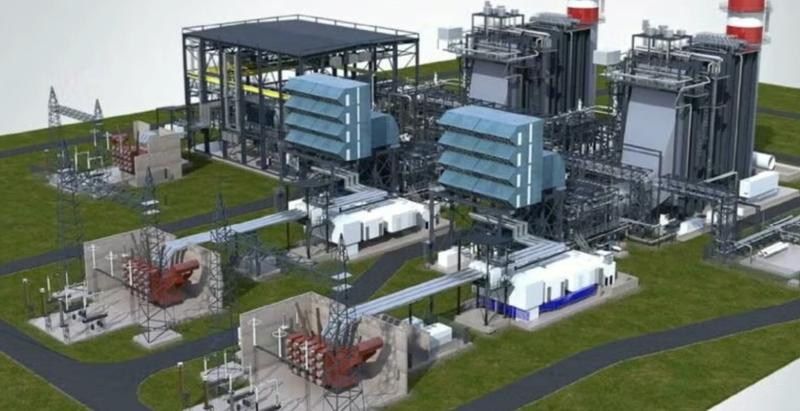
A community group reports a preliminary air-permit decision for Prairie Energy Center. The power proposal is documented by TCEQ, while the wider data-center concept and construction schedule remain unconfirmed.
NRG’s proposed Prairie Energy Center in rural Hill County has reached a reported milestone in air permitting, putting a potential 1.2GW gas-fired power development back in focus for the region’s construction market.
No Maypearl Data Center, a group opposing the development, said in an October 12 announcement that residents had received letters indicating a preliminary Texas Commission on Environmental Quality decision to approve an air permit. The decision letter itself has not been independently recovered for this report. The announcement should therefore be read as the group’s account of the regulatory development, rather than confirmation of a final permit or a construction start.
Project at a Glance
- Developer:
- NRG Prairie Energy Center LLC
- Proposed capacity:
- 1.2GW, as described in community reporting
- Air-permit references:
- 183570 / PSDTX1706 / GHGPSDTX272
- Status:
- Air-permit review; preliminary decision reported
- Construction start:
- Not confirmed
What the regulatory record establishes
TCEQ’s published notice identifies NRG Prairie Energy Center LLC as the applicant and lists air-quality permit 183570 alongside PSDTX1706 and GHGPSDTX272. It records an application submitted on March 31, 2026. These references give the power proposal a specific regulatory identity that can be followed independently of the broader data-center discussion.
The published project summary describes two natural-gas-fired combustion turbines operating in combined-cycle configuration. The proposed location is north of the intersection of County Road 4419 and FM 66, in the Grandview area of Hill County. The community discussion also refers to nearby Maypearl and Itasca.
A combined-cycle plant with defined emissions controls
The application summary describes a facility producing electricity for sale. Its two proposed gas-fired combined-cycle turbine generators and associated equipment are a more specific description than the broad power-and-data-center concept circulating locally. The summary identifies selective catalytic reduction for nitrogen-oxide control and an oxidation catalyst for carbon monoxide and volatile organic compounds. These are proposed permit features, not evidence that equipment has been ordered or installed.
Combined-cycle generation uses heat from a gas turbine’s exhaust to support an additional steam cycle. That arrangement has consequences for construction: the turbine installation must be coordinated with heat-recovery equipment, steam systems, cooling, electrical equipment and the services that connect them. A final equipment configuration, supplier list and construction sequence would be needed to turn that general process into a reliable package schedule.
The 1.2GW headline is an electrical-capacity figure reported in the community account. It does not describe the size of a single turbine, the number of homes served or the amount of electricity the associated data-center concept would consume continuously. Those comparisons require operating assumptions that the reviewed project documents do not establish.
A much larger campus concept remains to be established
The opposition group describes a related hyperscale campus of approximately 24 buildings and more than 8 million square feet across around 2,850 acres, supported by six substations and wastewater infrastructure. Those figures come from the group’s description of the development; a complete owner-issued campus plan has not been verified.
The distinction matters commercially. A proposed generation facility, an associated computing campus and the infrastructure connecting them can have different owners, permits, financing decisions and delivery schedules. None should be treated as a single awarded construction package solely because they appear together in community reporting.
Why the air-permit milestone matters
The April application notice sets out a process that moves from administrative and technical review toward a draft permit, a preliminary decision and a further notice inviting public participation. That sequence helps explain why a preliminary decision can be an important development without being a final construction authorization. The October account needs to be read against the actual decision and any conditions or subsequent proceedings.
An air permit addresses a defined regulatory scope. It does not, by itself, establish every land-use, utility, drainage, road or commercial arrangement needed to deliver a power station and neighboring development. For construction teams, the useful question is how those separate approvals and owner commitments align with a funded delivery program.
A signed EPC contract, equipment commitments, an approved construction schedule and verified site mobilization would provide stronger evidence of an executable construction program. Until those steps are documented, the project belongs in the development pipeline rather than a list of newly awarded or active building contracts.
Power, water and the development boundary
The proposed computing campus introduces a second set of infrastructure questions. A generator’s capacity and a data center’s electrical load are not interchangeable measures, and the reviewed material does not establish how electricity would be contracted, connected or allocated between customers. A large generation proposal should not be treated as a guarantee of a particular campus power-delivery date.
Water supply, cooling arrangements, wastewater handling and supporting access works also need project-specific evidence. Community descriptions of wastewater infrastructure do not quantify the plant’s or campus’s water demand, identify a secured water source or confirm a treatment contract. Those details could materially affect the eventual civil and utility scope, but they remain open rather than verified awards.
Construction status and the next milestones
No verified total construction budget, start date, power-generation EPC appointment or data-center building contractor has been established. A reported preliminary air-permit decision does not demonstrate that the entire development is authorized, financed or ready for site construction.
The immediate milestones are recovery of the preliminary decision and associated technical documents, clarification of the data-center developer and site layout, and an owner-backed construction timetable. If the development progresses, turbine foundations, electrical interconnection, cooling infrastructure and site utilities would be major elements to examine in the eventual scope. They are potential workstreams, not announced subcontract awards.