Eli Lilly Breaks Ground on $6.5B Houston Manufacturing Campus
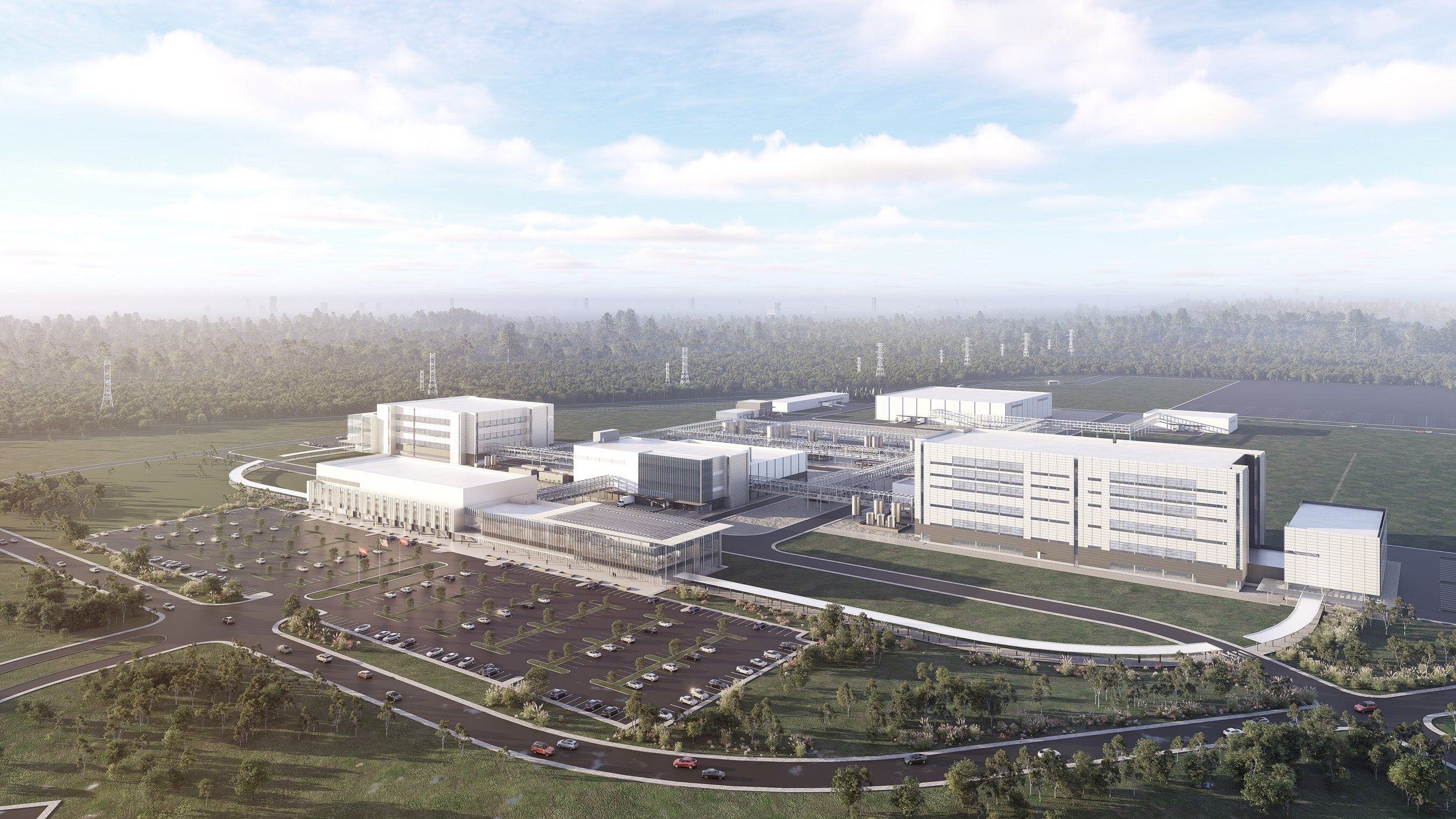
Eli Lilly has officially broken ground on its $6.5 billion pharmaceutical manufacturing campus in Houston, launching one of the largest advanced-manufacturing construction programs currently underway in Texas.
The development is being built at Generation Park in northeast Houston, where Lilly plans to establish a major domestic manufacturing operation for active pharmaceutical ingredients used in small-molecule medicines and advanced therapeutics.
Lilly formally broke ground on September 21, 2026, almost exactly one year after announcing Houston as the location for the investment.
The scale alone makes the development significant for Texas construction:
Investment: $6.5 billion Location: Generation Park, Houston Site: approximately 236 acres Construction jobs: approximately 4,000 Permanent jobs: 600+ Primary use: active pharmaceutical ingredient manufacturing Major design/build contractor: Bechtel Additional design: Jacobs Engineering Group, CRB Architects and Energy Architecture on identified packages
The project will ultimately require considerably more than conventional building construction. Pharmaceutical manufacturing at this scale creates major packages across process mechanical, piping, clean utilities, HVAC, electrical, instrumentation and controls, automation and specialty systems.
What Is Lilly Building in Houston?
The new operation will manufacture active pharmaceutical ingredients rather than simply package finished medicines.
Lilly says the plant will produce ingredients for Foundayo (orforglipron), its oral GLP-1 medicine, alongside other small-molecule medicines and advanced therapeutics. The facility will also support oligonucleotide manufacturing.
The manufacturing systems are expected to make extensive use of automation, machine learning, AI, integrated digital systems and advanced analytics.
That makes this a highly technical construction program.
A significant portion of the eventual investment will be tied to the manufacturing equipment and process infrastructure inside the buildings, rather than simply the shells themselves.
Bechtel Has a Major Delivery Role
One of the most important construction details is Bechtel's involvement.
Bechtel's Manufacturing & Technology operation has publicly described itself as designing and building an API manufacturing facility at Generation Park in Houston, establishing the contractor as a major design/construction delivery partner on Lilly's development.
The identified contractor and designer map is:
Owner: Eli Lilly and Company Major design/build delivery: Bechtel Building 21 shell design: Jacobs Engineering Group Oligo Manufacturing Building 11 shell design: CRB Architects P.C. Central Utility Building shell design: Energy Architecture
The available evidence does not establish that Bechtel holds every construction package across the entire $6.5B campus.
That's important because Texas filings show other engineering/design firms attached to individual components of the campus.
Texas Filings Reveal the Construction Packages
The filings separate identifiable building scopes from the wider investment.
Texas Department of Licensing and Regulation records are beginning to show individual buildings and construction packages.
Small Molecule Manufacturing Building 21
TDLR records identify one of the principal structures as Small Molecule Manufacturing Building 21.
The filing shows:
Estimated construction cost: $193 million Size: 341,505 SF Construction start: August 1, 2026 Completion: November 30, 2027 Design firm: Jacobs Engineering Group
The registered scope covers the shell package, including the building envelope, primary structural framing, interior stairs and elevator shafts.
That distinction is important.
The $193M filing does not represent the complete cost of Building 21. It covers the shell scope recorded with TDLR; process equipment and interior manufacturing systems can represent enormous additional investment.
$131M Oligo Manufacturing Building 11
The Oligo Manufacturing Building 11 registration identifies CRB Architects P.C. as designer for a $131 million, 232,887-SF shell package. Its filed schedule runs from August 1, 2026 to October 30, 2027.
The scope covers the building envelope, primary framing, stairs and elevator shafts. As with Building 21, the filing does not establish the cost of the complete manufacturing fit-out or identify every construction subcontractor.
$44.79M Central Utility Building
Another newly registered package provides an early look at the infrastructure required to operate the campus.
TDLR registered the Lilly Houston Campus Central Utility Building on September 14.
The filing shows:
Estimated construction cost: $44,791,584 Size: 110,110 SF Construction: November 2, 2026 – November 30, 2027 Design firm: Energy Architecture
Again, the registered scope is specifically the exterior shell, with the interior buildout to be submitted separately.
For contractors, the Central Utility Building is particularly interesting because a pharmaceutical campus of this scale requires extensive central utility and process infrastructure.
The eventual packages can include systems such as chilled water, heating, electrical distribution, process utilities, water treatment, compressed air, controls and other plant infrastructure depending on final design.
Construction Timeline
The submitted package schedules begin before the ceremonial groundbreaking; filed dates are planning information and do not independently prove the actual start of work.
The Building 21 TDLR schedule lists construction starting in August 2026, while the Central Utility Building is scheduled to begin in November.
Lilly officially broke ground on the wider development on September 21.
Individual shell packages currently run through late 2027, but that should not be confused with completion of the entire manufacturing operation.
Lilly originally said the Houston facility was expected to become operational within five years of its September 2025 announcement.
That points toward the broader campus being brought online around the end of the decade.
4,000 Construction Jobs
Lilly expects approximately 4,000 construction jobs to be generated while the Houston facility is built and brought online.
Once operational, the company expects more than 600 permanent positions, including engineers, scientists, operations personnel and laboratory technicians.
Lilly is also investing $12.5 million with San Jacinto College to support workforce development and training associated with the new manufacturing operation.
The workforce numbers demonstrate the difference between this and a conventional warehouse or manufacturing shell.
This is a multi-year construction and commissioning program requiring highly specialized trades.
Where the Contractor Opportunities Are
The following potential trade needs are a scope-based assessment, not a list of open bid invitations or confirmed subcontract awards.
A pharmaceutical API campus of this scale potentially creates significant opportunities across:
Process piping and mechanical systems
Large pharmaceutical manufacturing operations require extensive process piping, utility distribution and equipment connections.
HVAC and environmental systems
Manufacturing spaces can require tightly controlled temperature, humidity, ventilation and air-quality conditions.
Electrical
The production buildings, central utilities and automated manufacturing equipment create substantial electrical-distribution requirements.
Instrumentation & controls
Process manufacturing relies heavily on instrumentation, controls and automation.
Clean and process utilities
Depending on the manufacturing process, these can include purified water, clean steam, compressed gases and other specialized utility systems.
Structural steel and concrete
The currently filed Building 21 shell alone covers more than 341,000 SF.
Equipment installation
A significant portion of the $6.5B investment will ultimately sit inside the buildings in the form of production and utility equipment.
Commissioning and validation
Pharmaceutical facilities require extensive testing, commissioning and validation before production begins.
The TDLR Numbers Don't Add Up to $6.5B — And That's Expected
This is worth explaining because readers looking through Texas filings could otherwise misunderstand the project.
The $193M Building 21, $131M Building 11 and $44,791,584 Central Utility Building shell registrations total $368,791,584—approximately $368.79M—across 684,502 SF. This is the sum of three identified packages, not the whole campus.
They do not represent Lilly's entire Houston investment.
Lilly's announced $6.5B covers the broader manufacturing development, including additional buildings, interior construction, manufacturing systems, process infrastructure, equipment and other project costs.
More TDLR filings and construction packages are therefore likely to surface as the campus progresses.
That is something Texas Construction Hub will continue tracking.
Why Houston?
Lilly selected Generation Park after evaluating more than 300 applications for the manufacturing facility.
The company cited factors including the Houston region's workforce, infrastructure, transportation connections, utilities, incentives and overall business environment.
The investment also adds another major advanced-manufacturing project to the Houston region at a time when Texas is attracting unprecedented investment across pharmaceuticals, semiconductors, energy and AI infrastructure.
What We’re Watching Next
The groundbreaking isn't the end of the construction story.
In many ways, it is the beginning.
Texas Construction Hub will be watching for the next round of Bechtel procurement and subcontract awards, additional TDLR packages and contractor appointments.
The unresolved contractor appointments include the firms handling:
Mechanical/process piping | Electrical | HVAC | Instrumentation & controls | Structural steel | Concrete | Clean utilities | Fire protection | Equipment installation | Commissioning
Those appointments will tell us much more about where the $6.5 billion investment is actually flowing through the construction industry.
With approximately 236 acres, $6.5B of investment and 4,000 construction workers, Lilly's Generation Park campus is not simply another Houston manufacturing project.
It is becoming one of the largest and most technically complex advanced-manufacturing construction programs underway in Texas.