
Saronic’s $3B+ Brownsville Shipyard Secures U.S. Navy LCU Work
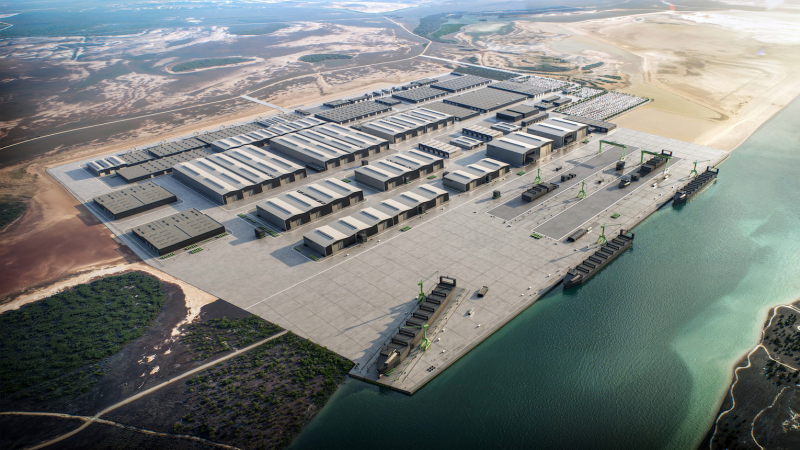
Saronic’s planned Port Alpha shipyard in Brownsville now has a named opening vessel program: Landing Craft Utility production for the U.S. Navy. The award gives contractors tracking the multibillion-dollar development a clearer view of the industrial operation the site must support.
The Navy announced September 15 that Saronic, Conrad Shipyard in Orange and Master Boat Builders in Alabama received prototype agreements for LCU 1700 craft. The initial $280.52 million construction obligation covers all three yards. It is not Saronic’s individual award value, and it is separate from the investment in Port Alpha itself.
Project scale and timing
Saronic’s July announcement describes more than $3 billion of planned investment, with construction anticipated in 2026 and operations targeted for 2028. The initial site is 835 acres, with potential expansion to nearly 4,400 acres. The first facility is intended to accommodate vessels up to 850 feet; later expansion could support longer ships.
The initial footprint and expansion potential describe different stages of development. Neither should be treated as the area already under construction.
Saronic’s September announcement, reported by the Brownsville Herald, targets LCU production in 2028 and first deliveries in 2029. The Navy’s wider three-yard program anticipates deliveries beginning in late 2028 and continuing through 2029. These are different schedule scopes and should not be combined into a promised 2028 Saronic delivery.
The contractor map
Saronic is the shipyard developer and vessel builder. The Navy is the customer for the LCU program. Conrad and Master Boat Builders are parallel vessel-program recipients, not identified construction subcontractors at Port Alpha.
The reviewed announcements do not identify a general contractor, construction manager or EPC firm for the Brownsville shipyard. They also do not establish awarded marine, civil, structural or electrical packages.
That distinction matters: a contract to manufacture vessels does not disclose who will build the production halls, waterfront structures or utility systems needed to manufacture them.
Technical scope and likely trade demand
Port Alpha is planned as an integrated shipbuilding and manufacturing facility with waterfront access and deepwater-channel connectivity. Saronic intends to combine conventional shipbuilding skills with robotics and software.
Texas Construction Hub’s scope assessment is that contractors should watch for site preparation, drainage, foundations, industrial structures, electrical distribution and production-equipment installation. Waterfront construction and heavy material-handling systems are also logical areas to investigate, subject to the final yard design.
These are potential work areas inferred from the planned facility, not advertised bid packages. No annual vessel-production capacity or detailed building-area schedule is established by the sources reviewed for this report.
What remains unresolved
The next contractor-intelligence milestones are the yard’s delivery team, the boundaries of the first construction phase, waterfront permitting and the sequencing of production equipment. A confirmed start-of-work update would also clarify progress against the announced 2026 construction window.
The Navy award strengthens Port Alpha’s workload story. The construction story still depends on turning the announced shipyard program into defined, awarded and delivered infrastructure.