
Denton’s $92M Pecan Creek Water Plant Expansion Enters Construction
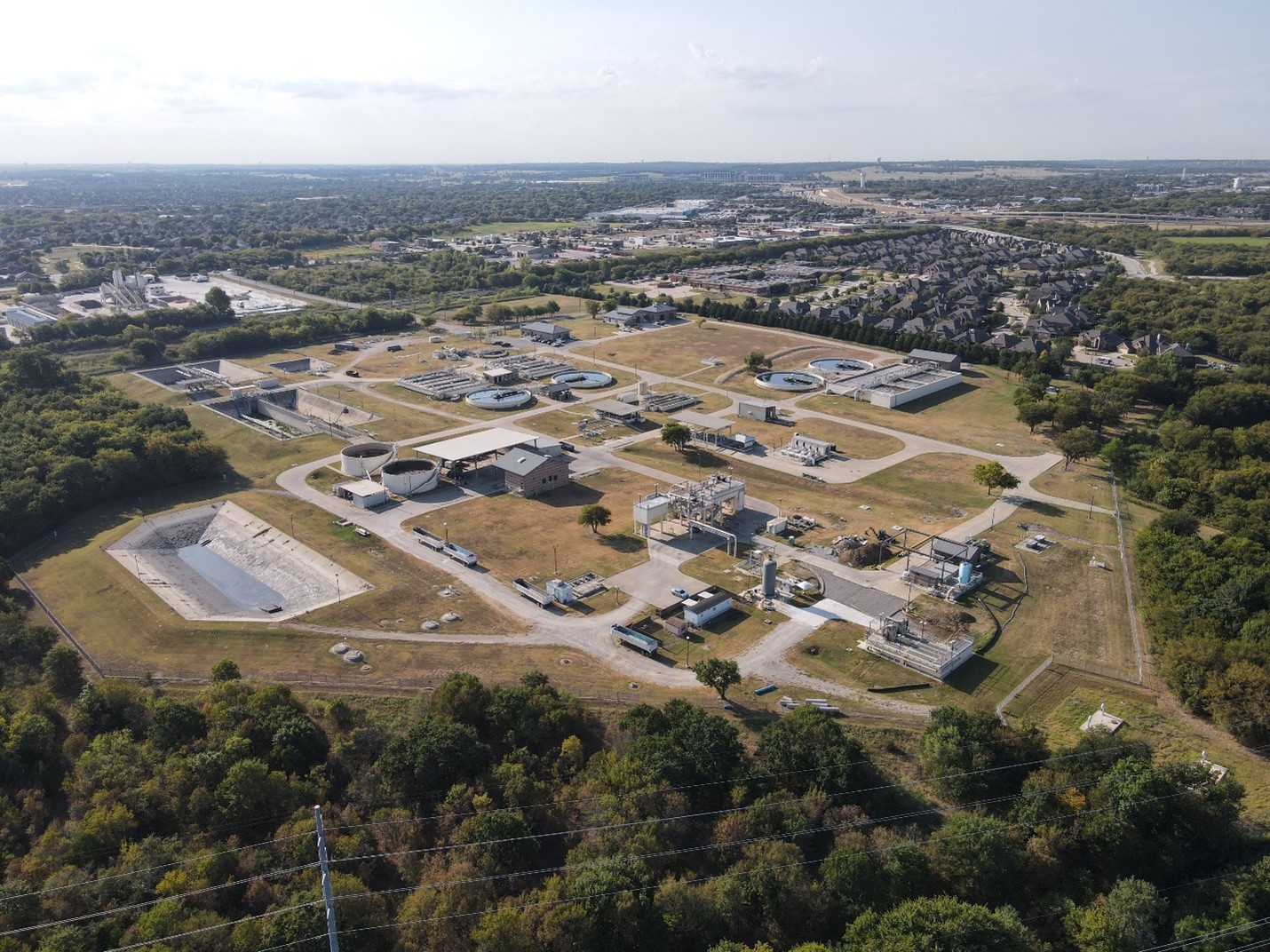
The program combines headworks, membrane treatment and supporting plant improvements while the existing facility continues operating.
Construction has started on the Pecan Creek Water Reclamation Plant expansion in Denton, a reported $92 million program that adds and improves multiple treatment processes. The groundbreaking took place September 18; October coverage provides further construction context for that earlier field milestone.
The scope includes headworks designed for 75 million gallons per day and a 30-million-gallon-per-day membrane bioreactor component. These are capacities for different parts of the treatment process. They should not be added together and described as 105 million gallons per day of total plant capacity.
Project at a Glance
- Reported program:
- Approximately $92 million
- Headworks design flow:
- 75 million gallons per day
- Membrane bioreactor scope:
- 30 million gallons per day
Construction appointment
Sundt Construction is delivering the Pecan Creek Water Reclamation Plant expansion. Its announcement identifies the September 18 groundbreaking, the headworks and membrane-bioreactor scope, and the requirement to maintain existing operations.
Several treatment systems within one program
The work also includes ultraviolet disinfection, digestion and solids-handling improvements, together with utilities and other supporting facilities. A treatment-plant expansion is therefore a connected process program rather than a single standalone building.
Each component has an interface with the rest of the facility. Civil structures, mechanical equipment, electrical supplies and controls must support a sequence of treatment operations. Completion of an individual structure is not the same milestone as a successfully commissioned process.
How the process improvements fit together
Headworks sits at the front of a wastewater-treatment process, preparing incoming flow for downstream treatment. Membrane bioreactor technology combines biological treatment with membrane filtration. EPA guidance explains that the membranes perform the solids-separation function, helping produce a high-quality treated stream within a comparatively compact process arrangement.
That distinction helps explain the two capacities in the Pecan Creek announcement. The incoming-flow facilities and the membrane treatment component have different functions and design requirements. Adding their stated capacities together would imply a plant output that the announcement does not establish. The expansion needs to be understood as an interconnected treatment system.
Commissioning has to prove the process, not just the equipment
A treatment plant can contain completed civil structures and installed machinery before the new process is ready to take its intended load. Equipment checks, controls integration and the transition of flows all contribute to commissioning. With the existing facility continuing to operate, the interfaces between old and new works are especially important.
The EPA’s technology guidance also identifies membrane cleaning and operating demands as considerations for this type of treatment. Those requirements make access for maintenance and the supporting mechanical and electrical systems part of the long-term facility design. They are relevant context for the announced membrane scope, not evidence that a particular equipment supplier or operating arrangement has been selected for Denton.
Construction alongside continuing operations
The existing plant remains operational during the expansion. That creates a delivery requirement beyond building the new assets: connections and transitions have to be coordinated with continued wastewater treatment.
The published information establishes the construction start and broad scope, but not a verified final completion date. The next useful updates will identify process-by-process progress and the planned transition into service. Those details will show how the expansion is being integrated into the operating plant and whether particular stages are ready for testing or commissioning.