
Amazon files $100M 1.2M SF Robotics factory in Austin
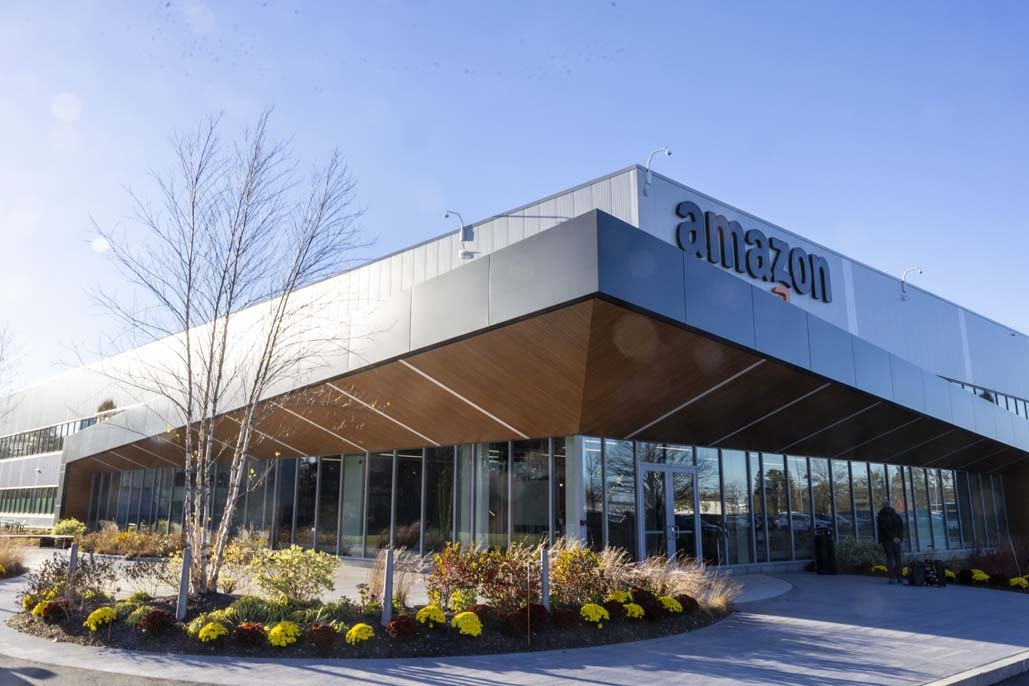
Project Toaster’s registration sets out four manufacturing and support areas, with a filed November start and July 2027 completion.
Amazon’s planned robotics manufacturing operation in East Austin has gained a much clearer physical outline. A construction registration filed October 19 describes a 1.2-million-square-foot building at 475 Patton Avenue, with factory, casting, office and utility-plant areas. The filing gives the project a $100 million estimated construction cost and a schedule beginning November 16, 2026.
Those figures describe civil site development and the building’s core and shell. They do not represent the complete cost of establishing and equipping Amazon’s manufacturing operation. Amazon previously described the Austin development as a multibillion-dollar investment, a wider commitment that should remain separate from this particular registration.
Project at a Glance
- Filed estimate:
- $100 million — civil works and core and shell
- Building area:
- 1.2 million SF
- Address:
- 475 Patton Avenue
- Filed schedule:
- November 16, 2026–July 13, 2027
Checking your membership…
Explore the full project scope, delivery team and construction timeline.
Explore insights →What the registration adds
The Texas accessibility record identifies the project as Project Toaster – Core and Shell and names Amazon.com Services LLC as owner. It records one building organized into four functional areas, rather than four separately announced factories. The listed completion date is July 13, 2027. As a filed schedule, that is a planning target rather than evidence that a construction contract guarantees delivery on that date.
The new information substantially improves the picture available to the construction market. A broad announcement about manufacturing jobs becomes a defined building program, with an address, floor area and a specific scope. It also creates a useful baseline against which later registrations, permit changes and field milestones can be compared.
At 1.2 million square feet, the building is large enough that its internal arrangement matters as much as its headline size. Factory and casting areas have different operating requirements from administrative offices, while the utility plant supports the production environment. The registration does not publish room-by-room layouts, equipment specifications or a breakdown of the cost assigned to each area.
A factory supporting Amazon’s robotics network
Amazon announced the Austin operation in August, saying it would manufacture advanced robotic systems that support employees across its fulfillment network. The company projected approximately 300–500 manufacturing and engineering jobs. That makes this an industrial production project, rather than another warehouse simply using robots to handle customer orders.
The distinction affects how the building should be understood. Manufacturing requires accommodation for production activities and their supporting services. A fulfillment center is primarily organized around the movement and handling of goods. Both can involve automation, but the presence of robots does not make their building programs interchangeable.
Amazon’s existing presence in Austin provides wider context for the investment. The company says it employs around 17,000 people in the metropolitan area, and its Texas footprint already includes logistics, technology and other operations. The new plant extends that presence into the manufacture of robotic systems themselves. These company employment figures are context for the announcement, not a forecast of the construction workforce on this site.
Why the $100 million figure needs a clear boundary
Large industrial developments commonly generate several distinct financial figures: overall corporate investment, a registered building estimate and, later, individual equipment or construction packages. Here the $100 million figure is explicitly tied to the civil and core-and-shell scope. Combining it with a broader investment announcement as if both described the same contract would obscure the project rather than clarify it.
The registration does not establish the value of machinery, production fit-out, commissioning or any subsequent phase. It also does not provide a trade-by-trade allocation. Readers should therefore avoid using the filed amount to infer the value of electrical, mechanical or specialist process packages.
The four-area description nevertheless indicates where future documentation may become informative. Production equipment, the casting operation and the utility plant will need to work within the building’s design. Further filings may explain those interfaces, but their existence and value should not be assumed before records are available.
Construction activity and the filed start date
Reporting says site preparation has been underway since June. That earlier activity and the November date in this registration are not necessarily contradictory: preliminary site works and the registered core-and-shell package can represent different stages. The record does not, by itself, establish the exact boundary between work already performed and work still to begin.
The next useful field milestone is confirmation that the registered building scope has started. After that, structural progress, enclosure and building-services installation would provide more concrete evidence of delivery than the registration date alone. The July 2027 entry should continue to be described as the filed completion target until the owner provides a confirmed update.
What this means for the delivery market
The combination of manufacturing space and a utility plant points to coordination among civil works, the structure, building services and production requirements. That is a reason to follow the project closely, not proof that any particular package is open for bids. The public material reviewed does not identify a general contractor or confirmed mechanical and electrical construction appointments.
The registration does identify a design firm; that verified role is included in the member section. A design listing must not be converted into an appointment as general contractor. Equally, the absence of a contractor from an accessibility filing does not establish that the owner has not selected one elsewhere.
For firms assessing the opportunity, the most useful next disclosures will be a confirmed delivery team, any additional fit-out registrations and a clearer procurement timetable. These would show how the manufacturing operation will be delivered beyond the shell now on record. Until then, the strongest verified news is the scale and composition of the building, alongside a defined but provisional construction window.
Explore the project overview, dated updates and delivery milestones in Project Insights.
Explore project insights →