
SpaceX and Tesla Target 2028 Production at $16.8B Terafab
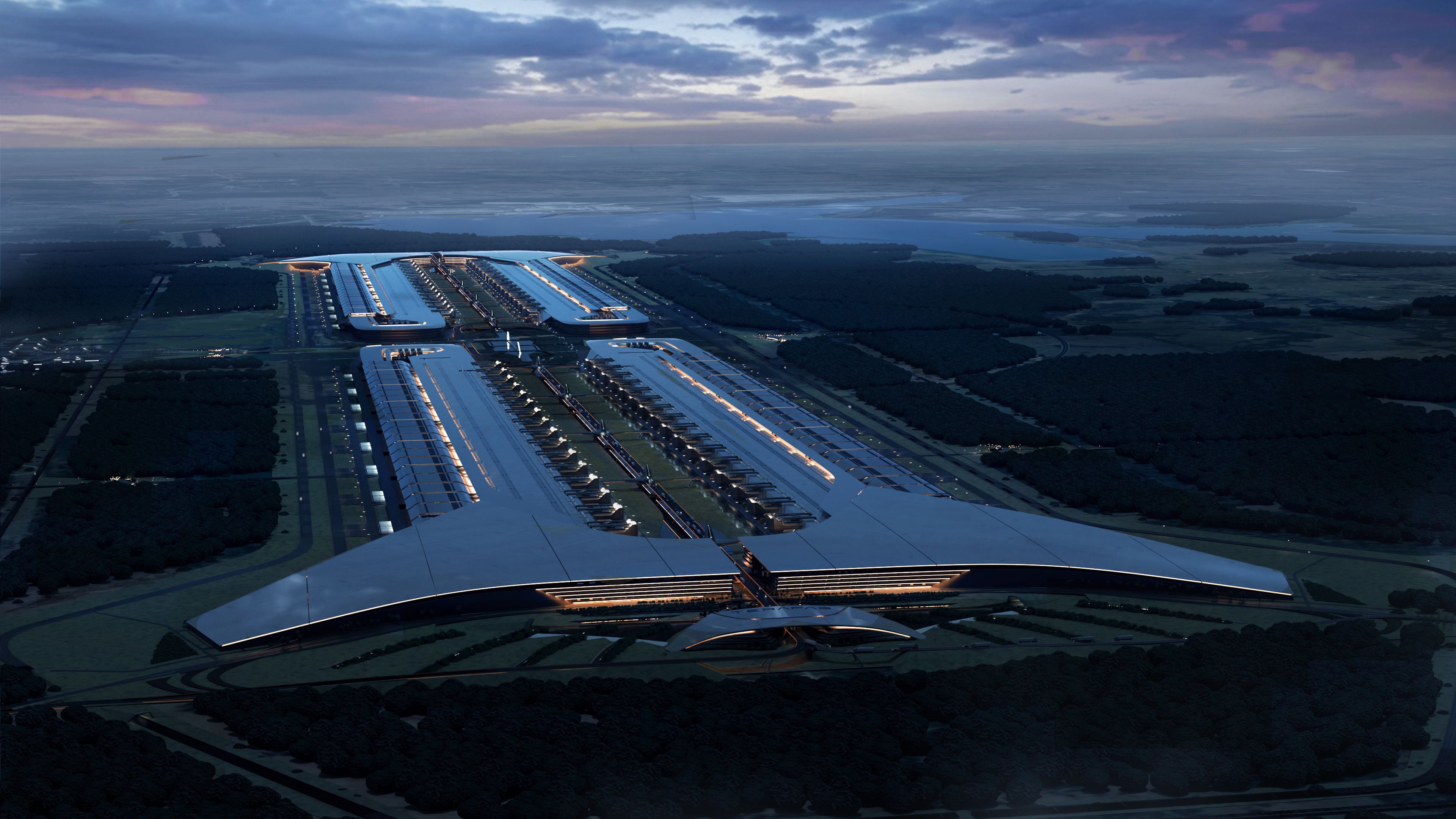
Musk’s latest timetable sets an ambitious production goal for the proposed semiconductor complex, with an earlier test-chip milestone in Austin.
SpaceX and Tesla’s Terafab semiconductor project has a more specific production ambition, but the distance between that ambition and an operating factory remains the central construction question. Elon Musk said on an October 20 SpaceX conference call that the venture is aiming for volume chip production in 2028, while acknowledging substantial uncertainty around the schedule.
The proposed Grimes County development carries an announced first-phase investment exceeding $16.8 billion. The latest remarks do not announce a new general-construction award, demonstrate completion of the factory or replace the need for a project-level delivery schedule. They set a commercial target against which future construction and equipment milestones can be assessed.
Project at a Glance
- First-phase investment:
- More than $16.8 billion announced
- Volume-production target:
- Second half of 2028; highly uncertain
- Research milestone:
- First working test chip targeted for May–June 2027
- Status:
- Announced development; GC not publicly confirmed
Two sites, two different milestones
The earlier milestone concerns the research facility at Tesla’s Austin campus. Musk said the first working SRAM test chip is targeted around May or June 2027. That is separate from the volume-manufacturing objective for the larger Terafab development. A successful test chip would be a technical milestone, not evidence that the full Grimes County complex had reached its intended output.
Reuters reported a third-quarter-2028 volume target and emphasized Musk’s warning that the schedule carries large uncertainties. For construction planning, the defensible reading is an aggressive second-half-2028 ambition. It is not a fixed handover date on which every building, process system and production line can be assumed to be ready.
What the $16.8 billion figure represents
The governor’s August announcement placed the first phase in Grimes County and associated it with more than $16.8 billion of capital investment and 3,000 jobs. The figure concerns the industrial investment program. It should not be treated as the value of a single building contract or assigned entirely to civil and structural construction.
Semiconductor investment combines the physical facility with the specialized systems and equipment needed to operate it. Without a published package breakdown, the share attributable to structures, utilities, cleanroom systems and production tools remains unclear. That distinction is especially important when comparing Terafab with other large Texas construction projects.
The broader campus ambition needs a phase boundary
The wider development has been described as potentially reaching approximately 100 million square feet. That long-range scale is different from a defined first-phase building area. Combining the full-campus area with the initial capital figure would imply a level of scope certainty that the available announcements do not establish.
A usable construction program would identify which buildings and supporting infrastructure belong to the initial production stage, what can follow later and which shared systems must be in place before any line operates. Those phase boundaries will determine the practical sequence much more clearly than the ultimate campus ambition alone.
A building shell is only one part of factory readiness
Terafab is intended to bring semiconductor fabrication, packaging and testing into a coordinated manufacturing complex. The construction significance lies in the interfaces between those functions. Building completion, tool installation and production qualification are separate milestones; reaching one does not automatically establish the others.
For project observers, a useful progress update would distinguish structural completion from cleanroom readiness, utility availability and equipment commissioning. That approach avoids declaring a factory operational when construction photographs show only an enclosed building. It also avoids treating an equipment delivery as proof that the supporting facility is ready to use it.
Utilities and process infrastructure deserve their own scrutiny
The announced manufacturing scope points to demand for specialist mechanical and electrical systems, process distribution and controlled production environments. However, the reviewed material does not establish capacities, connection dates or awarded packages for power, water, cooling or process services. Those should remain questions for future verified disclosures.
Construction sequencing will depend on how those services are provided and tested. A campus can contain completed buildings while still waiting for a critical connection or commissioned system. Tracking the utility milestones alongside the building program will give a more useful indication of readiness than treating the project as a single percentage-complete number.
Technology participation is not a construction award
Intel has previously announced participation in the initiative. That involvement should not be converted into a claim that Intel is the general contractor or that it has received responsibility for every manufacturing and construction package. Technical relationships, equipment procurement and physical delivery contracts serve different purposes.
No general contractor, EPC contractor or installing mechanical and electrical team has been publicly confirmed in the material reviewed for this update. The absence of an announced appointment does not establish that procurement has not begun; it means the available evidence does not support naming a delivery company.
The construction milestones that will test the timetable
The most useful next evidence would be a defined first-phase scope, a confirmed delivery team, a dated field-construction update and a sequence for bringing utilities and equipment into service. Each would reduce a different uncertainty: what is being built, who is delivering it, how far it has progressed and when it can operate.
The Austin test-chip target deserves separate tracking because it speaks to technology development. A later volume-production update should explain the scale and readiness of the manufacturing line, rather than simply repeat the target year. Neither milestone should be substituted for the other in a construction timeline.
A major opportunity with an unusually demanding schedule
For Texas industrial construction firms, Terafab remains a project to follow closely because of its announced investment, specialist manufacturing scope and potential supporting infrastructure. The useful commercial signal will be the release of defined work packages and verified appointments, not the assumption that the entire proposed campus is immediately available to bid.
The October announcement sharpens the ambition without resolving the delivery questions. A 2028 production target now gives observers a clear point of comparison for future milestones. Until those milestones are documented, the project should remain described as an announced development with an aggressive and explicitly uncertain production schedule.
Explore the project overview, dated updates and delivery milestones in Project Insights.
Explore project insights →