
Court Overturns Lake Ringgold Permit, Setting Back $560M Water Project
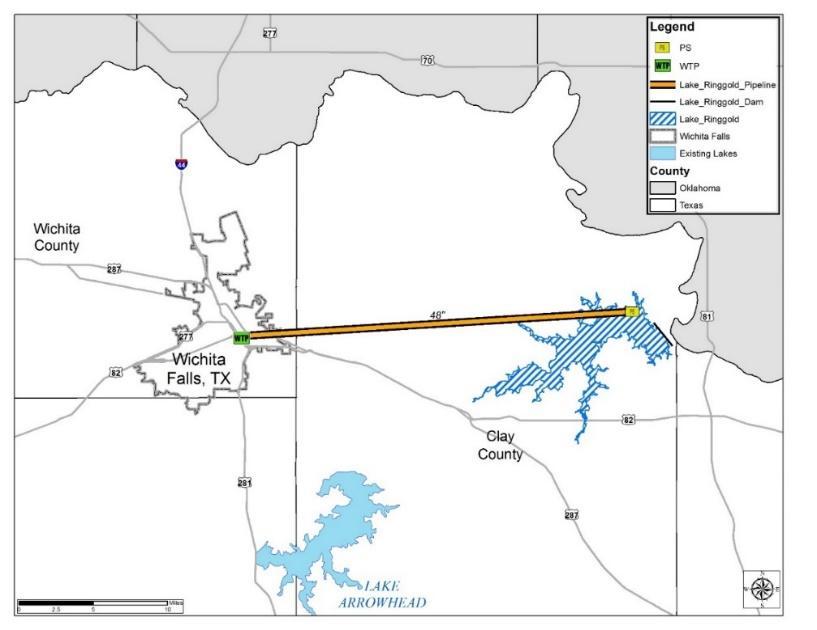
An October 9 bench ruling challenges Wichita Falls’ reservoir permitting path. The regional water plan describes a dam, intake and 29-mile transmission system; a signed court order has not yet been reviewed by TCH.
The proposed Lake Ringgold reservoir has suffered a significant permitting setback. Local reporting says the 459th District Court in Travis County reversed the state permit from the bench on October 9, following arguments over the Texas Commission on Environmental Quality’s approval. The Texas & Southwestern Cattle Raisers Association separately announced the ruling in favor of affected landowners.
TCH has not located the signed court order. The development should therefore be described as a reported reversal with the precise written terms still to be reviewed, rather than as a permanent cancellation of every element of the project.
Project at a Glance
- Owner:
- City of Wichita Falls
- Planning capital estimate:
- Approximately $560 million
- Reservoir:
- 15,500 acres in the 2026 Region B plan
- Latest milestone:
- State permit reversed from the bench, according to October 9 reporting
Checking your membership…
A reservoir and a regional transmission system
The 2026 Region B Water Plan describes a proposed 15,500-acre reservoir in Clay County, with a dam on the Little Wichita River and approximately 275,000 acre-feet of storage at normal pool. Its infrastructure program includes an intake and pump station and roughly 29 miles of 48-inch transmission pipeline carrying raw water toward Wichita Falls.
The plan places total capital cost at approximately $560 million. That is a planning estimate for the proposed system, not the value of an awarded dam or pipeline contract. The estimate includes a broader delivery scope than an isolated reservoir excavation.
The state and federal pathways remain distinct
The city’s background material separates the state water-right process from the federal Clean Water Act Section 404 process. The water plan records TCEQ approval in May 2024 and, before the latest ruling, estimated another 10–15 years to completion, with a substantial portion allocated to permitting.
The October ruling changes the context for that forecast. The existing planning horizon should not be presented as an unchanged construction timetable. The city’s previously identified federal permitting-consultant role does not constitute a construction award or eliminate the state-permit issue.
The city is considering its next step
Wichita Falls Mayor Tim Short told News Channel 6 that the city had 30 days to consider an appeal. The city also said it remained committed to the project as a long-term water-supply strategy. Those statements establish the city’s position, but do not confirm that an appeal has been filed or predict its outcome.
Opponents have challenged the reservoir’s need, alternatives and effects on land and habitat. The city’s published case for the project emphasizes drought resilience and regional supply. TCH has not independently resolved those competing technical arguments, and the reported ruling should not be expanded beyond its documented scope.
What the setback means for construction tracking
Lake Ringgold is now primarily a permitting and legal watch. Before a dependable construction program can be assigned, readers need the written ruling, the city’s formal response and an updated explanation of how the remaining approvals connect.
No dam, pipeline or overall construction-prime award has been verified in the reviewed material. A later delivery update should distinguish engineering and permitting services from physical construction procurement, and should reconcile any revised capital estimate with the scope and schedule then being proposed.