
Houston’s $2.6B Terminal B Transformation Reaches Major Opening Milestone
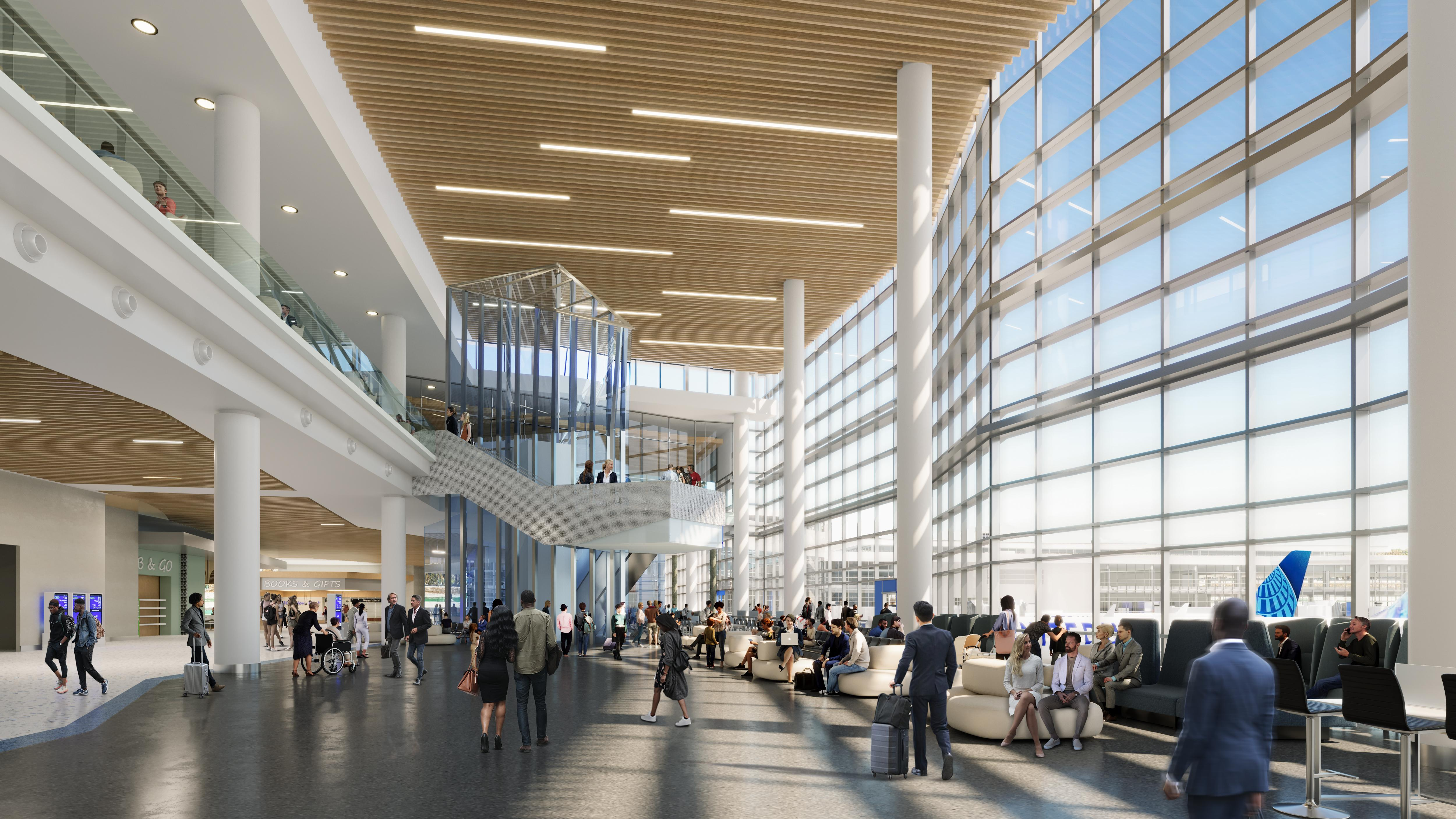
United’s 765,000-square-foot North Concourse brings 22 gates into the airport’s transformation, while work continues elsewhere in the Terminal B program.
George Bush Intercontinental Airport’s Terminal B transformation has reached its most visible passenger milestone. United Airlines announced on October 21 that the new North Concourse would open to the public on October 22, bringing a substantial part of Houston’s $2.6 billion terminal program into use.
The opening concerns a specific part of the redevelopment. It does not mark completion of every Terminal B construction package. Work on the South Concourse and associated terminal infrastructure remains part of the wider program, making this a phased transition from construction to operation.
Project at a Glance
- Program:
- Approximately $2.6 billion
- North Concourse:
- 765,000 SF across three levels
- Gates:
- 22 mainline gates
- Opening:
- October 22, as announced by United
Checking your membership…
Explore the full project scope, delivery team and construction timeline.
Explore insights →What the North Concourse delivers
The new concourse occupies 765,000 square feet across three levels and provides 22 mainline gates. United also announced a 54,000-square-foot club with seating for approximately 800 people. These are substantial pieces of passenger infrastructure, but the gate building is only one component of the terminal’s operating system.
Aircraft stands must connect with passenger boarding, baggage handling, security screening, circulation and landside access. An opening therefore tests more than the appearance of a finished building. It brings those systems together under live passenger demand, with airport and airline teams managing the handover from construction activity to daily service.
The design includes approximately 105,000 square feet of dining and retail space, with two large concession hubs. Children’s facilities and a sensory room form part of the passenger environment. Those uses add fit-out and servicing requirements beyond the gate lounges themselves, illustrating why a concourse is a collection of operating spaces rather than simply a long corridor.
A replacement shaped by changing aircraft
The airside redevelopment replaces Terminal B North’s older flight stations with a dual-pier arrangement. The project’s published construction scope describes a constrained existing site where the available apron had to be used efficiently to accommodate larger aircraft and more suitable gates.
That distinction helps explain the project’s physical form. Replacing gates built for an earlier operating model involves aircraft positioning, boarding bridges and the relationship between apron space and the terminal envelope. A bigger building alone would not resolve those interfaces.
South Concourse work has a different starting point: adapting facilities that served ground-loaded regional aircraft. The published scope describes boarding-bridge additions and accommodation for larger regional jets. The North and South works should therefore be tracked as related packages with distinct delivery requirements, rather than treated as identical copies.
The construction story began before the visible building
Houston Airports and United outlined their investment partnership in November 2023. The program included terminal processing, baggage systems, roadway access and concourse work. In March 2024, Houston City Council allocated $150 million from the airport construction fund to advance the transformation. That allocation was a funding milestone within the larger program, not a separate terminal project to add to the headline total.
An airport update in September 2024 documented foundation work at the central processor, including drilled piers and auger-cast piles. It also described interior foundation construction and preparations for structural steel. These earlier milestones show the sequence behind the current opening: enabling work, foundations, structure, enclosure, fit-out and operational preparation.
They also show why the project cannot be reduced to the date of its ribbon-cutting. Much of the work that makes a terminal usable is concealed below the building, behind finishes or within connections to existing infrastructure. Progress in those areas is essential even when it produces less visible change for passengers.
Keeping an airport operating around the jobsite
A delivery-team account published in April 2025 described the overnight deactivation of the existing central processor that January. Thirteen enabling projects had preceded that change. They included relocating airport functions, moving underground train controls and establishing replacement food-production capacity.
The same account described temporary passenger circulation through the jobsite and coordinated changes to wayfinding, shuttles and travel information. These were construction-enabling measures: the terminal redevelopment needed existing operations to move before permanent work could proceed.
For airport construction, that makes sequencing a core part of delivery. A temporary route or relocated service is not merely an inconvenience to manage after the design is complete. It can determine which workfront becomes available, how materials reach it and whether surrounding facilities can continue operating safely.
What the investment figure does—and does not—measure
The approximately $2.6 billion figure describes the Terminal B Transformation Program. It should not be presented as the price of the North Concourse alone or as a fresh construction award announced this week. Likewise, earlier city funding approvals are components of the financing history, not extra projects to stack on top of that total.
United says the program has supported approximately 3,000 construction-related jobs and involved 308 Houston suppliers. Those measures describe participation in delivery. They should not be confused with permanent airport employment, and they do not establish that any particular trade package is currently open for bidding.
The move toward operation changes the nature of the work to watch. Remaining construction, commissioning, tenant readiness and handover can overlap. An opening is a meaningful achievement, but it does not by itself reveal the final account, the status of every subcontract or the completion of all defects and finishing items.
What remains to be tracked
The next useful milestones are the remaining South Concourse works and the delivery of associated terminal systems and access improvements. Future updates should identify the specific package that has advanced, rather than applying a single completion label to the entire airport program.
For the North Concourse, the operational transition is the immediate focus. For the broader investment, the key question is how the remaining works connect to the spaces entering service. Houston’s airport expansion is therefore moving into a mixed phase: passengers gain a major new facility while construction continues elsewhere in the program.
The members-only Project Insight brings the delivery team, package boundaries and dated construction milestones together. It separates the North Concourse opening from the continuing program so that later updates can be assessed against a clear baseline.
Explore the project overview, dated updates and delivery milestones in Project Insights.
Explore project insights →